Hey there! As a control valve supplier, I often get asked about the Cv value of a control valve. So, let's dive right in and break down what this Cv value is all about.
First off, the Cv value, also known as the flow coefficient, is a super important factor when it comes to control valves. It's basically a number that tells you how much fluid a valve can let through under specific conditions. Think of it like the "traffic capacity" of a valve for liquids or gases.
To put it simply, a higher Cv value means the valve can handle a larger flow rate of fluid. For instance, if you've got a valve with a high Cv, it can let a whole bunch of water rush through in a short time. On the flip side, a lower Cv value indicates that the valve restricts the flow more, allowing only a small amount of fluid to pass.
Now, how is the Cv value calculated? Well, the formula for calculating Cv is based on some key factors. The most common formula is (Cv = Q \sqrt{\frac{G}{\Delta P}}), where (Q) is the flow rate of the fluid (usually in gallons per minute for liquids in the US system), (G) is the specific gravity of the fluid (compared to water, which has a specific gravity of 1), and (\Delta P) is the pressure drop across the valve.
Let's say you're dealing with water ((G = 1)) and you know the flow rate (Q) and the pressure drop (\Delta P) across the valve. You can plug those values into the formula to find out the Cv value of the valve. This calculation helps engineers and system designers choose the right valve for their specific application.
Why is the Cv value so crucial? Well, in industrial processes, getting the right flow rate is essential. Whether it's in a chemical plant where precise amounts of chemicals need to be mixed, or in a water treatment facility where the flow of water needs to be regulated, the Cv value of the control valve plays a vital role.
If you choose a valve with a Cv value that's too low for your application, it'll act like a bottleneck. The fluid won't be able to flow through at the required rate, which can lead to inefficiencies, slower production, or even system failures. On the other hand, if you pick a valve with a Cv value that's too high, you might end up with excessive flow, which can also cause problems like over - pressurization and damage to the system.
There are different types of control valves, and each type can have different Cv characteristics. For example, Directional Control Valve is used to control the direction of fluid flow. The Cv value of a directional control valve will determine how much fluid can be redirected in a given time. These valves are commonly used in hydraulic systems, where the flow of hydraulic fluid needs to be precisely controlled to operate machinery like excavators and forklifts.
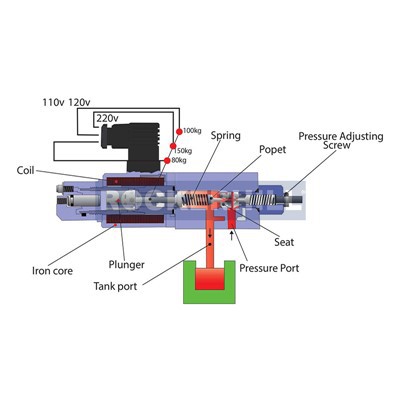
Another type is the Pressure Control Valve. This valve is designed to maintain a constant pressure in a system. The Cv value of a pressure control valve affects how quickly it can adjust the flow to keep the pressure stable. In a steam system, for example, a pressure control valve with the right Cv value is crucial to ensure that the steam pressure remains within the safe and optimal range.
When selecting a control valve based on its Cv value, you also need to consider other factors. The type of fluid is a big one. Different fluids have different viscosities and specific gravities, which can affect the flow through the valve. For example, a thick, viscous fluid like oil will flow differently compared to a thin, watery fluid. So, you might need a valve with a different Cv value for each type of fluid.
The temperature of the fluid is another factor. High - temperature fluids can cause the valve materials to expand or change properties, which can in turn affect the Cv value. You need to make sure the valve you choose can handle the temperature range of your application without significant changes in its flow characteristics.
The size of the valve is also related to the Cv value. Generally, larger valves tend to have higher Cv values because they have a larger opening for the fluid to pass through. However, it's not just about the size. The internal design of the valve, such as the shape of the valve seat and the way the valve plug moves, can also have a big impact on the Cv value.
As a control valve supplier, we've got a wide range of valves with different Cv values to suit various applications. Our team of experts can help you figure out the right Cv value for your specific needs. We understand that every project is unique, and we're here to provide you with the best - fitting solution.
If you're in the process of planning a new system or looking to upgrade an existing one, and you're not sure which control valve with the right Cv value is the best choice, don't hesitate to reach out. We can have a detailed discussion about your requirements, including the type of fluid, the flow rate you need, and the pressure conditions. Based on that, we'll recommend the most suitable control valve for your project.


In conclusion, the Cv value of a control valve is a key parameter that determines the valve's ability to control the flow of fluid. Understanding this value and how it relates to your application is essential for the efficient and reliable operation of your system. Whether you're in the manufacturing, energy, or water treatment industry, getting the right control valve with the appropriate Cv value can make a huge difference in your process. So, if you're interested in learning more or making a purchase, just get in touch with us for a friendly chat and some professional advice.
References
- "Valve Handbook" by Crane Co., which provides in - depth information on valve sizing and Cv calculations.
- "Fluid Mechanics and Thermodynamics of Turbomachinery" by S. L. Dixon, which offers theoretical background on fluid flow and valve performance.