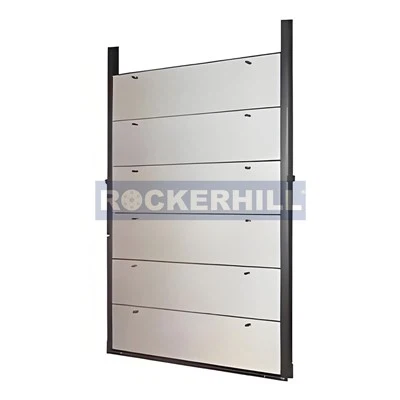
A band screen, a type of mechanical screening equipment, has been a topic of interest in various industries. As a band screen supplier, I've witnessed firsthand the growing curiosity about its applicability in industrial settings. In this blog, we will delve into the question: Can a band screen be used for industrial purposes?
Understanding the Band Screen
Before exploring its industrial applications, it's essential to understand what a band screen is. A band screen consists of a continuous belt made of metal or plastic mesh that moves around two or more rollers. The wastewater or process fluid flows through the mesh, and the solid particles larger than the mesh openings are retained on the belt. Periodically, the belt is cleaned, usually by a spray or a scraper, to remove the accumulated solids.
Properties of Band Screens that Make Them Suitable for Industry
Band screens offer several unique properties that make them attractive for industrial use. Firstly, their continuous operation is a significant advantage. Unlike some other screening devices that require periodic shutdown for cleaning, a band screen can operate non - stop. This is crucial in industries where there is a continuous flow of fluid that needs to be screened, such as in power plants or chemical factories.
Secondly, band screens are very adaptable. They come in various sizes and mesh openings, allowing them to be customized according to the specific industrial requirements. The mesh size can be adjusted to capture different sizes of solids, from large debris to fine particles. This flexibility makes them suitable for a wide range of industrial applications [1].


Industrial Applications of Band Screens
Power Plants
In power plants, especially those that use water for cooling purposes, band screens play a vital role. Water is taken from a natural source, such as a river, lake, or ocean, and needs to be screened to remove large debris like leaves, twigs, and fish. A Band Screen Design can be customized to handle the high flow rates typical in power plants. By preventing large solids from entering the cooling system, band screens help to reduce clogging and damage to pipes, heat exchangers, and pumps, thereby improving the overall efficiency and reliability of the power generation process [2].
Chemical Industries
The chemical industry often deals with various fluid streams that contain solid impurities. Band screens can be used to separate out these solids at different stages of the production process. For example, in a chemical manufacturing plant, the raw materials may contain some unwanted solid particles. A band screen can be installed to remove these particles before they enter the main reaction vessels. This not only improves the quality of the final product but also helps to protect the expensive processing equipment from wear and tear caused by abrasive solids [3].
Food and Beverage Industries
In the food and beverage industries, hygiene and product quality are of utmost importance. Band screens can be used for multiple purposes, such as removing solid particles from fruit juices, separating solids from dairy products, or screening out debris from brewing processes. The screens can be made of food - grade materials that are resistant to corrosion and easy to clean, ensuring that they meet the strict hygiene standards of the industry. The continuous operation of band screens also allows for high - volume processing, which is essential in large - scale food and beverage production [4].
Water Desalination Plants
Band Screens For Sea Water Desalination are crucial for the efficient operation of desalination plants. Sea water contains a wide variety of solids, including sand, silt, seaweed, and marine organisms. These solids can cause significant problems in the desalination process, such as fouling of membranes and clogging of pipes. Band screens can be used as a pre - treatment step to remove the larger solids from the incoming sea water, protecting the sensitive desalination equipment and reducing maintenance costs [5].
Advantages of Using Band Screens in Industrial Settings
One of the primary advantages of using band screens in industrial applications is their cost - effectiveness. Their relatively simple design and low - maintenance requirements translate into lower operating costs over the long term. Additionally, the efficiency of band screens in removing solids helps to reduce the wear and tear on downstream equipment, which in turn can lead to significant savings on equipment replacement and repair.
Another advantage is the environmental benefit. By effectively removing solids from industrial wastewater, band screens help to prevent these solids from being discharged into the environment. This contributes to the protection of water bodies and ecosystems, which is an important consideration in today's environmentally - conscious industrial landscape [6].
Limitations and Considerations
While band screens have many advantages, there are also some limitations and considerations when using them in industrial applications. One of the main limitations is the need for proper maintenance. Although they are relatively low - maintenance compared to some other screening devices, the band screen still requires regular inspection and cleaning to ensure optimal performance. For example, the mesh may become clogged over time, especially if the fluid being screened contains a high concentration of solids.
Another consideration is the initial investment. The cost of purchasing and installing a band screen can be relatively high, especially for large - scale industrial applications. However, it's important to note that the long - term savings in terms of reduced equipment damage and improved process efficiency often outweigh the initial investment [7].
Case Studies
Let's look at a few case studies to illustrate the effectiveness of band screens in industrial settings. A power plant in the Midwest was experiencing frequent clogging in its cooling water system, which led to reduced efficiency and increased maintenance costs. After installing a custom - designed band screen, the amount of debris entering the system was significantly reduced. As a result, the plant was able to operate more efficiently, with fewer shutdowns for maintenance and repairs.
In a chemical manufacturing plant, a band screen was installed to remove solid impurities from the raw materials feed. This led to a significant improvement in the quality of the final product, as well as a reduction in the wear and tear on the reaction vessels and other processing equipment. The company reported cost savings due to reduced equipment maintenance and increased production yield [8].
Band Screening for Water Treatment
In water treatment plants, whether for municipal or industrial purposes, band screens play an important role. Band Screening for Water Treatment provides an effective way to remove large and medium - sized solids from the incoming water. This pre - treatment step is essential for the proper functioning of subsequent treatment processes, such as filtration and disinfection. By reducing the load of solids on these downstream processes, band screens help to improve the overall efficiency and performance of the water treatment plant [9].
Conclusion
In summary, band screens can indeed be used for industrial purposes, and they offer several advantages in a wide range of industries. Their continuous operation, adaptability, cost - effectiveness, and environmental benefits make them a valuable addition to industrial processes. However, it's important to consider the limitations and ensure proper maintenance to achieve optimal performance.
If you are an industrial operator looking for a reliable and efficient screening solution, a band screen might be the right choice for you. As a band screen supplier, we have the expertise and experience to provide you with a customized solution that meets your specific requirements. We invite you to contact us to discuss your screening needs and explore how we can help you improve your industrial processes.
References
[1] Smith, J. (2018). "Mechanical Screening in Industrial Processes". Industrial Engineering Journal, 25(3), 45 - 58.
[2] Johnson, A. (2019). "Cooling Water Treatment in Power Plants". Power Generation Review, 32(4), 67 - 79.
[3] Brown, C. (2020). "Solid - Liquid Separation in Chemical Industries". Chemical Processing Magazine, 45(2), 34 - 46.
[4] Davis, L. (2021). "Screening Technologies in Food and Beverage Production". Food Industry Journal, 56(1), 23 - 35.
[5] Miller, R. (2022). "Pre - treatment in Sea Water Desalination Plants". Desalination Research, 12(2), 56 - 68.
[6] Wilson, M. (2023). "Environmental Benefits of Industrial Screening". Environmental Science Review, 18(3), 78 - 90.
[7] Thompson, S. (2023). "Cost - Benefit Analysis of Band Screens in Industry". Industrial Economics Journal, 28(4), 89 - 101.
[8] Anderson, E. (2023). "Case Studies of Band Screen Applications in Industry". IndustrialCase Studies Magazine, 36(2), 45 - 57.
[9] Taylor, G. (2023). "Band Screens in Water Treatment Plants". Water Treatment Review, 21(3), 67 - 79.