Oil and water separation is a critical process in various industries, from wastewater treatment to oil refining. As a leading clarifier supplier, we understand the importance of efficient and effective separation methods. In this blog post, we'll delve into how a clarifier separates oil and water, exploring the underlying principles, different types of clarifiers, and their applications.
The Basics of Oil - Water Separation
The separation of oil and water is based on the principle of density difference. Oil is less dense than water, which means it tends to float on the surface of water. However, in real - world scenarios, oil and water often form emulsions, where small droplets of oil are dispersed throughout the water. These emulsions can be stable and difficult to separate.
A clarifier works by creating an environment where the natural separation process can occur more effectively. It provides a large, calm area where the oil droplets can rise to the surface and the water can be removed from the bottom.
How a Clarifier Facilitates Separation
Gravity Separation
The most fundamental mechanism in a clarifier is gravity separation. When a mixture of oil and water enters the clarifier, the less - dense oil droplets start to rise towards the surface due to buoyancy. The clarifier is designed to slow down the flow of the mixture, allowing sufficient time for the oil droplets to coalesce (combine) into larger droplets. Larger droplets rise more quickly, which speeds up the separation process.
The design of the clarifier plays a crucial role in gravity separation. For example, the Clarifier Design takes into account factors such as the size and shape of the tank, the inlet and outlet locations, and the flow rate. A well - designed clarifier ensures that the flow is evenly distributed across the tank, minimizing turbulence that could disrupt the separation process.


Coalescence
Coalescence is the process by which small oil droplets combine to form larger ones. In a clarifier, various internal components can promote coalescence. For instance, some clarifiers use coalescing media, which are materials with a high surface area. As the oil - water mixture passes through the media, the oil droplets adhere to the surface of the media and gradually combine with other droplets.
The choice of coalescing media depends on the properties of the oil and water mixture. Different types of media have different surface characteristics, which can affect the efficiency of coalescence. For example, media with a hydrophobic (water - repelling) surface can be more effective in attracting oil droplets.
Skimming
Once the oil has risen to the surface of the clarifier, it needs to be removed. This is typically done through a skimming process. A skimmer is a device that floats on the surface of the water and collects the oil layer. There are different types of skimmers, such as belt skimmers, tube skimmers, and weir skimmers.
Belt skimmers use a continuous belt that passes through the oil layer. The oil adheres to the belt, and as the belt moves, it carries the oil to a collection point. Tube skimmers use a tube that is placed just below the surface of the oil layer. The oil is drawn into the tube by suction and then pumped to a storage tank. Weir skimmers work by allowing the oil layer to flow over a weir (a barrier) into a collection trough.
Types of Clarifiers for Oil - Water Separation
Lamella Clarifiers
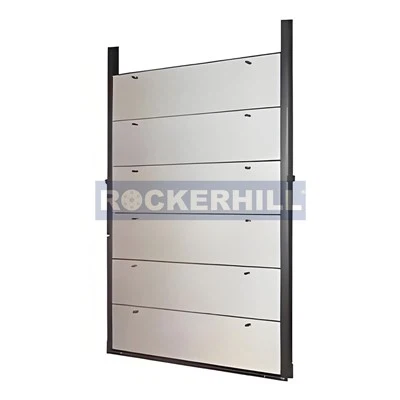
ROCKERHILL Lamella Clarifier is a type of clarifier that uses inclined plates or tubes to increase the effective settling area. The inclined plates or tubes provide additional surface area for the oil droplets to settle and coalesce. As the oil - water mixture flows through the lamella clarifier, the oil droplets rise along the inclined surfaces and collect at the top.
Lamella clarifiers are known for their compact design and high efficiency. They can achieve a high degree of separation in a relatively small footprint, making them suitable for applications where space is limited.
Dissolved Air Flotation (DAF) Clarifiers
DAF clarifiers work by introducing tiny air bubbles into the oil - water mixture. The air bubbles attach to the oil droplets, increasing their buoyancy and causing them to rise to the surface more quickly. The oil - bubble aggregates form a floating layer on the surface, which can then be skimmed off.
DAF clarifiers are particularly effective for separating fine oil droplets and emulsions. They are commonly used in industries such as food processing, where the oil - water mixtures can be complex and difficult to separate.
Applications of Oil - Water Separation Clarifiers
Wastewater Treatment
In Clarifier In Water Treatment Plant, oil - water separation is an important step in the treatment process. Industrial wastewater often contains oil and grease, which need to be removed before the water can be discharged or reused. Clarifiers can effectively separate the oil from the water, reducing the environmental impact of the wastewater.
Oil and Gas Industry
In the oil and gas industry, clarifiers are used to separate oil from produced water. Produced water is water that is brought to the surface along with oil and gas during the extraction process. Separating the oil from the produced water is crucial for environmental compliance and for the efficient operation of the oil and gas production facilities.
Food and Beverage Industry
The food and beverage industry generates wastewater that contains oil and grease from cooking processes. Clarifiers can be used to remove these contaminants from the wastewater, ensuring that the water meets the regulatory standards for discharge.
Why Choose Our Clarifiers
As a trusted clarifier supplier, we offer a range of high - quality clarifiers that are designed to meet the specific needs of different industries. Our clarifiers are engineered with the latest technology and materials to ensure maximum efficiency and reliability.
We have a team of experienced engineers who can provide customized solutions based on your requirements. Whether you need a small - scale clarifier for a laboratory or a large - scale industrial clarifier, we can design and manufacture a system that meets your needs.
In addition, we offer comprehensive after - sales support, including installation, maintenance, and repair services. Our goal is to ensure that your clarifier operates smoothly and efficiently throughout its lifespan.
Contact Us for Procurement
If you are in need of an oil - water separation clarifier for your industry, we invite you to contact us for a consultation. Our sales team is ready to answer your questions, provide detailed product information, and assist you in the procurement process. We believe that our clarifiers can provide you with an effective and cost - efficient solution for your oil - water separation needs.
References
- "Wastewater Treatment Engineering: Principles and Design" by Metcalf & Eddy.
- "Oil - Water Separation Technology" by the American Petroleum Institute.
- "Handbook of Water and Wastewater Treatment Plant Operations" by Glenn P. McGhee.