Hey there! As a bar screen supplier, I often get asked about the maximum particle size that a bar screen can block. It's a crucial question, especially for those in the wastewater treatment, sea - water desalination, and other industries that rely on these screens to keep their systems running smoothly.
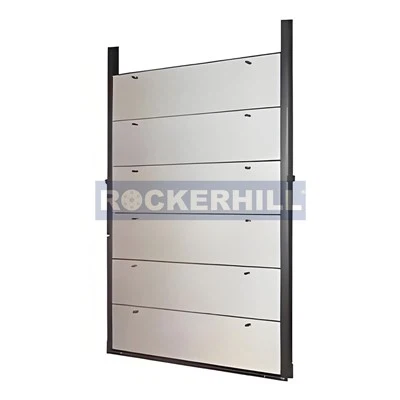
Let's start by understanding what a bar screen is. A bar screen is a simple yet effective device used to remove large solid particles from a liquid flow. It consists of a series of parallel bars or rods spaced at a specific distance apart. The spaces between these bars determine the size of the particles that the screen can block.
Factors Affecting the Maximum Blockable Particle Size
The maximum particle size that a bar screen can block depends on several factors. Firstly, the bar spacing is the most obvious one. The narrower the space between the bars, the smaller the particles that can be blocked. For example, in a wastewater treatment plant, bar screens with relatively wide bar spacings, say 20 - 50 mm, are often used in the preliminary treatment stage. These can block large objects like branches, rags, and plastic bottles. On the other hand, in more refined processes or applications where smaller particles need to be removed, bar screens with spacings as small as 3 - 6 mm can be used.


The shape of the particles also plays a role. Irregularly - shaped particles might get stuck in the bar screen more easily than spherical ones of the same equivalent diameter. A long and thin object, like a piece of wire, might be able to pass through a bar screen with a certain spacing if it aligns itself parallel to the bars, while a spherical object of the same maximum dimension might be blocked.
The flow velocity of the liquid is another important factor. High - velocity flows can carry particles through the bar screen more easily, even if the particles are larger than the bar spacing. This is because the force of the flowing liquid can push the particles through the gaps. In contrast, a slow - moving flow gives the particles more time to get caught in the screen.
Applications and Appropriate Particle Sizes
In wastewater treatment plants, as I mentioned earlier, different stages require different bar screen specifications. The initial bar screens, with wider spacings, are used to protect downstream equipment from large debris. This not only prevents damage to pumps and other machinery but also reduces the load on subsequent treatment processes. You can learn more about the design aspects of bar screens for wastewater treatment at Bar Screen Design.
For sea - water desalination plants, the requirements are a bit different. The goal is to remove particles that could damage the desalination membranes. These membranes are very sensitive, and even small particles can cause fouling and reduce the efficiency of the desalination process. That's why bar screens used in sea - water desalination often have smaller bar spacings. To find out more about bar screens specifically designed for sea - water desalination, check out Bar Screens For Sea Water Desalination.
Mechanical bar screens are a popular choice in many applications. They are designed to automatically clean the accumulated debris from the bars, which helps to maintain a consistent flow through the screen. These screens can be adjusted to have different bar spacings depending on the specific needs of the application. You can read more about mechanical bar screens at Mechanical Bar Screen.
Determining the Right Bar Screen for Your Needs
When you're trying to figure out the maximum particle size you need your bar screen to block, you have to consider your specific application. Start by analyzing the type of particles present in the liquid. If you're dealing with a lot of large, solid objects, a bar screen with a wider spacing will do the job. But if you need to remove smaller particles, you'll want a screen with a narrower spacing.
You also need to think about the flow rate of the liquid. If you have a high - flow application, you might need a more robust bar screen design to handle the force of the flowing liquid. And don't forget about maintenance. Mechanical bar screens can save you a lot of time and effort in terms of cleaning, but they might come at a higher cost.
Our Offerings as a Bar Screen Supplier
As a bar screen supplier, we offer a wide range of bar screens with different bar spacings to meet your specific requirements. Whether you're in the wastewater treatment industry, sea - water desalination, or any other field that needs particle separation, we've got you covered. Our team of experts can help you determine the best bar screen for your application based on the factors we've discussed above.
We understand that every project is unique, and that's why we're committed to providing customized solutions. We can work with you to design and manufacture bar screens that are tailored to your exact needs. And we don't just stop at selling the product. We also offer after - sales support to ensure that your bar screen continues to perform at its best.
Contact Us for Your Bar Screen Needs
If you're in the market for a bar screen and want to discuss your requirements, we'd love to hear from you. Whether you're not sure about the maximum particle size you need to block or you have other questions about our products, our team is ready to assist you. Just reach out to us, and we'll start the conversation about finding the perfect bar screen for your project.
References
- Water Treatment Handbook. This comprehensive guide provides in - depth information about different types of water treatment equipment, including bar screens.
- Desalination Technology Journals. These journals contain research and case studies on the use of bar screens in sea - water desalination processes.
- Industry Reports on Wastewater Treatment. These reports offer insights into the latest trends and best practices in using bar screens for wastewater treatment.