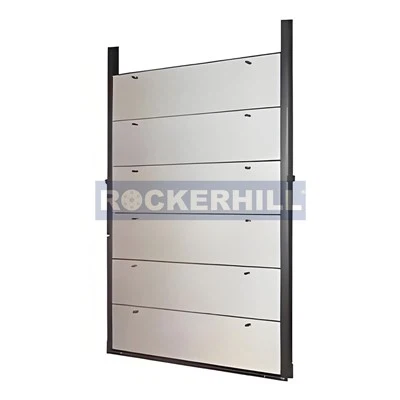
Surface treatment of a band screen is a crucial aspect that significantly impacts its performance, durability, and overall functionality. As a reputable band screen supplier, I am well - versed in the various surface treatment methods and their importance in the context of band screens.
Understanding Band Screens
Before delving into the surface treatment, it is essential to understand what a band screen is. Band screens are widely used in water treatment and desalination processes. They are designed to remove large debris, solids, and contaminants from water sources. For more detailed information about band screen design, you can visit Band Screen Design.
Band screens consist of a continuous band of screening media that moves in a loop. The water flows through the screen, and the debris is retained on the surface of the screen. The band then moves to a cleaning station where the debris is removed, allowing the screen to continue its operation. Band screens are used in a variety of applications, including Band Screens For Sea Water Desalination and Band Screening for Water Treatment.
Importance of Surface Treatment
The surface treatment of a band screen serves several important purposes. Firstly, it enhances the corrosion resistance of the screen. Band screens are often exposed to harsh environments, such as seawater in desalination plants or wastewater in treatment facilities. These environments contain various corrosive substances, such as salts, acids, and alkalis, which can cause the screen to corrode over time. A proper surface treatment can form a protective layer on the surface of the screen, preventing the corrosive agents from reaching the base material and thus extending the service life of the screen.
Secondly, surface treatment can improve the anti - fouling properties of the band screen. Fouling occurs when biological organisms, such as algae, barnacles, and bacteria, attach themselves to the surface of the screen. This can reduce the flow rate of water through the screen, increase the pressure drop, and ultimately lead to a decrease in the efficiency of the screening process. A surface treatment that repels these organisms can help maintain the performance of the screen.
Thirdly, surface treatment can also enhance the smoothness of the screen surface. A smooth surface reduces the friction between the screen and the debris, making it easier for the debris to be removed during the cleaning process. This improves the cleaning efficiency and reduces the energy consumption required for the cleaning operation.
Common Surface Treatment Methods
Galvanization
Galvanization is one of the most commonly used surface treatment methods for band screens. It involves coating the screen with a layer of zinc. Zinc is a sacrificial metal, which means that it will corrode preferentially to the base metal of the screen. When the zinc layer is exposed to the environment, it forms a protective oxide layer on its surface, which further inhibits the corrosion process.
Galvanization can be done through hot - dip galvanizing or electro - galvanizing. Hot - dip galvanizing involves immersing the screen in a bath of molten zinc. This method provides a thick and durable zinc coating, which is suitable for band screens that are exposed to highly corrosive environments. Electro - galvanizing, on the other hand, uses an electric current to deposit a thin layer of zinc on the screen surface. It is a more precise method and can be used for screens with complex geometries.


Powder Coating
Powder coating is another popular surface treatment option. It involves applying a dry powder to the screen surface and then heating it to melt the powder and form a smooth, durable coating. Powder coatings are available in a wide range of colors and can provide excellent corrosion resistance and aesthetic appeal.
The powder coating process starts with the preparation of the screen surface. The screen is cleaned and pretreated to ensure good adhesion of the powder. Then, the powder is applied using a spray gun, and the screen is placed in an oven to cure the coating. Powder coatings can be formulated to have specific properties, such as anti - fouling or anti - static properties.
Anodizing
Anodizing is a surface treatment method commonly used for aluminum band screens. It involves creating an oxide layer on the surface of the aluminum through an electrochemical process. The anodized layer is hard, wear - resistant, and corrosion - resistant.
During the anodizing process, the aluminum screen is immersed in an electrolyte solution and an electric current is passed through it. This causes the aluminum to react with the oxygen in the electrolyte to form an oxide layer on its surface. The thickness and properties of the anodized layer can be controlled by adjusting the process parameters, such as the current density, electrolyte concentration, and temperature.
Ceramic Coating
Ceramic coating is a relatively new surface treatment method for band screens. It involves applying a ceramic material to the screen surface to form a hard, wear - resistant, and corrosion - resistant coating. Ceramic coatings have excellent thermal stability and can withstand high temperatures, making them suitable for band screens that are used in high - temperature applications.
The ceramic coating process typically involves spraying a ceramic powder onto the screen surface and then sintering it at a high temperature to form a dense coating. Ceramic coatings can also be formulated to have self - cleaning properties, which can help prevent fouling.
Factors Affecting Surface Treatment Selection
When selecting a surface treatment method for a band screen, several factors need to be considered.
Environment
The environment in which the band screen will be used is the most important factor. If the screen is to be used in a seawater environment, a surface treatment with high corrosion resistance, such as hot - dip galvanizing or ceramic coating, is recommended. For screens used in a wastewater treatment plant, a treatment that can resist the chemicals and biological agents in the wastewater, such as powder coating or anodizing, may be more suitable.
Cost
The cost of the surface treatment is also an important consideration. Some surface treatment methods, such as galvanization, are relatively inexpensive, while others, such as ceramic coating, can be more costly. The cost - effectiveness of the treatment should be evaluated based on the expected service life and performance improvement of the screen.
Screen Material
The material of the band screen also affects the choice of surface treatment. For example, anodizing is only suitable for aluminum screens, while galvanization is commonly used for steel screens. The compatibility between the surface treatment and the base material should be ensured to achieve the best results.
Quality Control of Surface Treatment
To ensure the effectiveness of the surface treatment, strict quality control measures should be implemented during the treatment process. This includes proper surface preparation, accurate application of the treatment material, and appropriate curing or drying processes.
Before the surface treatment, the screen surface should be thoroughly cleaned to remove any dirt, oil, or rust. This can be done through mechanical cleaning methods, such as sandblasting or wire brushing, or chemical cleaning methods, such as degreasing.
During the application of the treatment material, the thickness and uniformity of the coating should be monitored. For example, in powder coating, the powder application rate and the spray pattern should be controlled to ensure a consistent coating thickness.
After the treatment, the screen should be tested to evaluate the quality of the coating. This can include tests for adhesion, corrosion resistance, and hardness. These tests can help identify any defects in the coating and ensure that the screen meets the required standards.
Conclusion
In conclusion, the surface treatment of a band screen is a critical factor that affects its performance, durability, and efficiency. As a band screen supplier, we understand the importance of choosing the right surface treatment method based on the specific application and requirements of our customers. Whether it is galvanization, powder coating, anodizing, or ceramic coating, each method has its own advantages and is suitable for different situations.
If you are in the market for high - quality band screens with excellent surface treatment, we are here to help. Our team of experts can assist you in selecting the most appropriate surface treatment method for your specific needs. We are committed to providing you with band screens that offer long - term performance and reliability. Contact us today to start a discussion about your band screen requirements and explore the possibilities of a customized solution.
References
- ASM Handbook Volume 5: Surface Engineering. ASM International.
- Corrosion Basics: An Introduction. NACE International.
- Powder Coating Technology: Principles and Practice. Society of Manufacturing Engineers.