


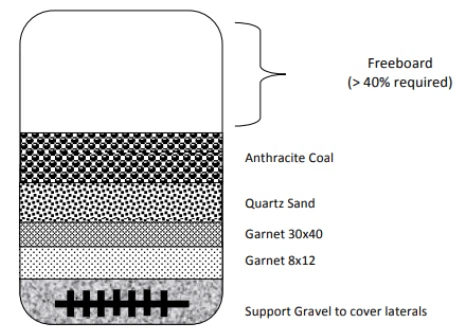
A media filter uses different layers of filter media to remove impurities from water or air. These layers, with varying particle sizes, trap suspended solids, sediment, and other contaminants. The filtration process involves influent water or air passing through these layers, with each layer capturing specific types of particles. Common media filter materials include anthracite, sand, garnet, and gravel. Filter media are widely used in industries such as water treatment, air purification, oil and gas, automotive, pharmaceuticals, and many others.
How do Media Filters work?
The filtration process involves slowing the passage of water through a bed of sand, or another granular medium. When this happens, the media absorbs much of the solid debris but allows the water to pass through. This is frequently repeated several times to eliminate enough contaminants, to make the water suitable for its intended usage.
What is Filter Media in Water Treatment?
In the world of water treatment, filter media is the cornerstone of efficient filtration systems. It refers to the materials used to trap, retain, or remove contaminants-such as sediments, bacteria, chlorine, and organic matter from water.
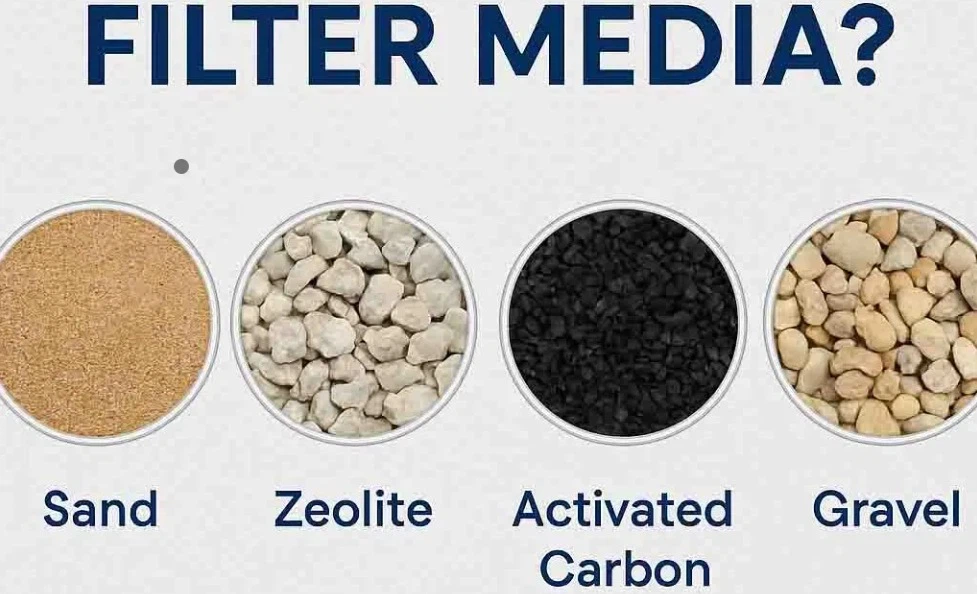
Filter media are available in various natural and engineered forms, including:
Silica Sand
Zeolite
Activated Carbon
Gravel
Choosing the right media is vital because it directly impacts filtration efficiency, lifespan, and water quality outcomes. At Starke Filter Media, we supply globally trusted, application-specific filter media for residential, municipal, and industrial water treatment systems.
Types of Filter Media Materials
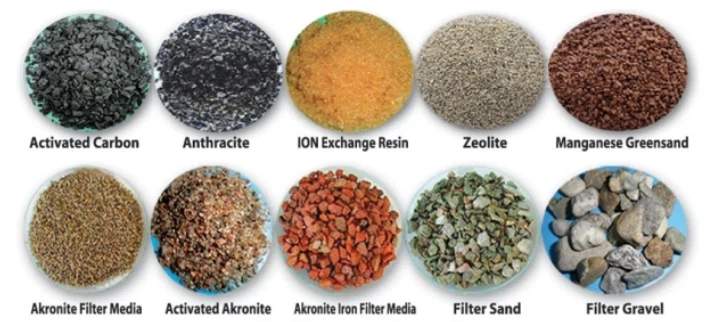
Each type of filter media serves a unique function in water purification. Here's a breakdown of commonly used materials:
Mechanical/Physical Filter Media: These filter media rely on physical barriers to separate particles from the fluid. Examples include woven or non-woven fabrics, such as polyester, cotton, nylon, or polypropylene, which can capture particles based on their size.
Activated Carbon: Activated carbon is an adsorbent material with a highly porous structure that attracts and traps organic molecules and certain gases. It is commonly used in air and water filters to remove odors, volatile organic compounds (VOCs), and contaminants like chlorine.
Sand and Gravel: Sand and gravel are commonly used as filter media in water treatment processes, such as rapid sand filters. These granular materials act as physical barriers and help remove suspended solids, turbidity, and larger particles from water.
Diatomaceous Earth: Diatomaceous earth is a naturally occurring sedimentary rock composed of fossilized diatoms. It has a high porosity and can be used as a filter media in applications where fine filtration is required, such as swimming pool filters or in the beverage industry.
Glass Fiber: Glass fiber filter cartridges are made from fine glass fibers that are woven or bonded together. They are commonly used in high-efficiency particulate air (HEPA) filters to remove very fine particles, including allergens, dust, and microorganisms, from the air.
Ceramic Filter Media: Ceramic filter media are made from porous ceramic materials that can be tailored to specific filtration requirements. They are used in applications such as wastewater treatment, where they can effectively remove suspended solids and bacteria.
Metal Filter Media: Metal filter media, such as stainless steel wire mesh or sintered metal filters, offer excellent durability and resistance to high temperatures and corrosive environments. They are commonly used in applications requiring high mechanical strength and compatibility with aggressive fluids.
The choice of filter media depends on the specific filtration requirements, including the desired particle size removal, flow rate, compatibility with the fluid or gas, and the expected lifespan of the filter. Manufacturers often combine multiple types of filter media in a layered structure to achieve efficient and effective filtration across a broad range of contaminants.
In conclusion, filter media play a crucial role in removing impurities and ensuring the quality and purity of fluids and gases in various industries. By utilizing different types of filter media, contaminants can be efficiently removed, leading to improved performance, safety, and environmental sustainability.
What substance Can Multi Media Filter Removes?
A multimedia filter reduce the suspended solids and make the water clean and fresh for further use.
An effective media filter is said to remove the particles of size down to 15-20 microns. It can remove all the large-sized particles, such as leaves, rocks, and even small-sized particles, such as slit, clay, garnet, algae, and even some microorganism, depending on the layering approach followed in the multimedia filter.
Advantages of multimedia filters
- High Filtration Efficiency:
Removes fine particles, turbidity, and suspended solids down to 10–20 microns with excellent clarity.
- Depth Filtration:
Multi-layered media enable filtration through the entire bed depth, not just the surface-ensuring longer run times.
- Extended Media Life:
Longer operational cycles between backwashes reduce water loss and lower operating costs.
- Low Pressure Drop:
Even with high filtration rates, MMFs maintain low differential pressure, minimizing energy consumption.
- Improves RO & EDI Efficiency:
Serves as a vital pre-treatment, protecting sensitive downstream equipment from fouling and scaling.
- Customizable Media Layers:
Media composition can be tailored (e.g., anthracite, garnet, activated carbon) based on water quality and treatment needs.
- Scalable Design:
Available in a wide range of sizes and flow capacities for residential, commercial, and industrial use.
- Minimal Maintenance:
Requires only periodic backwashing, which can be automated for ease of operation.
- Cost-Effective:
Reduces chemical usage, membrane replacements, and system downtime-saving operational costs.
- Environmentally Friendly:
Operates without harmful chemicals; only water and air are typically needed for backwash.


