


As a gate valve supplier, I often encounter questions from customers regarding the functionality of gate valves, especially their suitability for flow regulation. This blog post aims to delve into this topic, providing a comprehensive analysis based on scientific principles and practical applications.
Understanding Gate Valves
Before discussing the flow - regulating capabilities of gate valves, it's essential to understand their basic structure and operation. A gate valve consists of a gate (a flat or wedge - shaped disc) that moves perpendicular to the flow direction to open or close the valve. When the gate is fully raised, the valve is open, allowing unobstructed flow. When the gate is fully lowered, it seals against the valve seats, blocking the flow.
There are different types of gate valves available in the market, each with its own characteristics. For instance, the Hydraulic Gate Valve is powered by hydraulic pressure, which offers high - force operation and is suitable for large - scale industrial applications. The Sluice Gate Valve is commonly used in water treatment plants and irrigation systems, providing reliable on - off control. The Pneumatic Gate Valve uses compressed air to actuate the gate, offering quick operation and is often used in systems where rapid valve movement is required.
The Traditional View: Gate Valves as On - Off Devices
Historically, gate valves have been primarily regarded as on - off devices. This view stems from their design and operation. When a gate valve is partially open, the flow passes through a narrow opening between the gate and the valve seats. This creates a high - velocity flow, which can cause several problems.
Firstly, the high - velocity flow can lead to erosion of the valve components. The gate and the seats are subjected to intense wear due to the abrasive action of the fluid, especially if the fluid contains solid particles. Over time, this erosion can compromise the sealing performance of the valve, leading to leakage.
Secondly, a partially open gate valve can generate excessive noise and vibration. The turbulent flow around the gate creates pressure fluctuations, which can cause the valve and the connected piping to vibrate. This not only affects the structural integrity of the valve and the piping but also creates an uncomfortable working environment.
Thirdly, the flow characteristics of a gate valve are not well - suited for precise flow regulation. The relationship between the gate position and the flow rate is highly non - linear. A small change in the gate position near the fully open or fully closed position can result in a large change in the flow rate, making it difficult to achieve accurate flow control.
Modern Applications and Advancements
Despite the traditional view, there are modern applications where gate valves are used for flow regulation. In some cases, the requirements for flow control are not extremely precise, and the advantages of gate valves, such as low pressure drop when fully open, make them a viable option.
For example, in some industrial processes where a rough adjustment of the flow rate is sufficient, gate valves can be used. In a large - scale water distribution system, a gate valve can be used to adjust the overall flow rate in a pipeline. Although the flow control may not be as accurate as that achieved with a dedicated flow control valve, it can still meet the basic requirements of the system.
Advancements in valve design and materials have also improved the suitability of gate valves for flow regulation. New materials with better wear resistance and corrosion resistance have been developed, reducing the impact of erosion on valve performance. Some gate valves are now equipped with positioners and control systems that can help to improve the accuracy of flow regulation. These control systems can compensate for the non - linear relationship between the gate position and the flow rate, allowing for more stable flow control.
Factors to Consider When Using Gate Valves for Flow Regulation
If you are considering using a gate valve for flow regulation, there are several factors that you need to take into account.
Fluid Properties
The properties of the fluid being handled play a crucial role. If the fluid is abrasive or contains solid particles, the risk of erosion is higher, and special precautions need to be taken. For example, using a gate valve with a hardened surface or a lining material that can resist abrasion.
Flow Requirements
The required flow range and the accuracy of flow control are important considerations. If the flow rate needs to be adjusted within a narrow range with high precision, a gate valve may not be the best choice. However, if a rough adjustment is sufficient, a gate valve can be a cost - effective option.
System Conditions
The operating pressure and temperature of the system also affect the performance of the gate valve. High - pressure and high - temperature applications may require a gate valve with a more robust design and suitable materials to ensure reliable operation.
Conclusion
In conclusion, while gate valves have traditionally been considered as on - off devices, there are situations where they can be used for flow regulation. However, it is important to carefully evaluate the specific requirements of the application and consider the potential problems associated with using a gate valve for flow control.
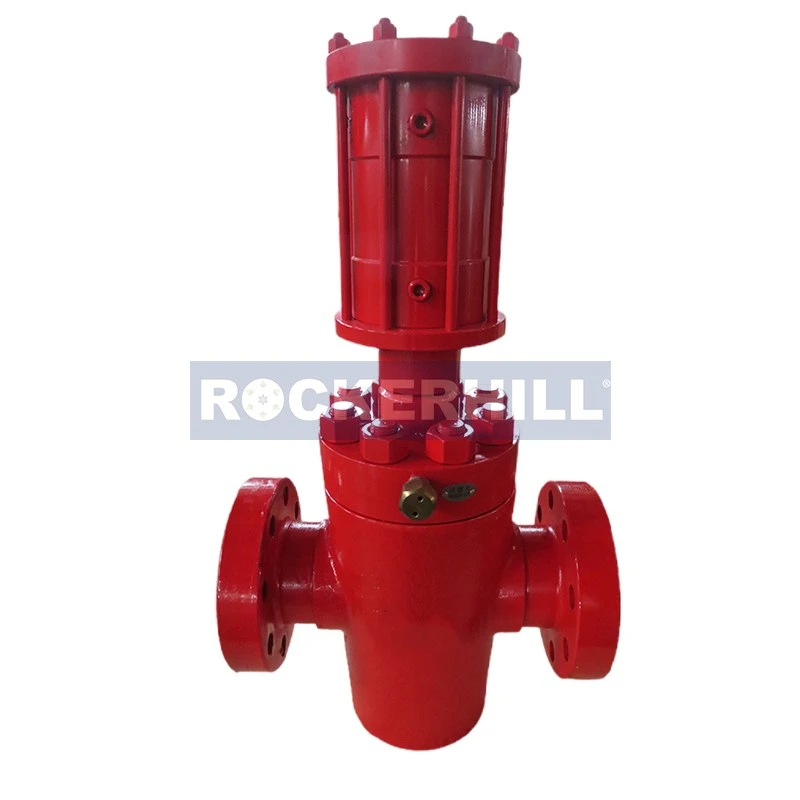

As a gate valve supplier, we have a wide range of gate valves to meet different application needs. Whether you need a simple on - off valve or a valve for flow regulation, we can provide you with the right solution. If you are interested in our products or have any questions about gate valve applications, please feel free to contact us for further discussion and procurement negotiation.
References
- ASME B16.34 - 2017, Valves - Flanged, Threaded, and Welding End.
- API 600 - 2015, Steel Gate, Globe, and Check Valves.
- Crane Technical Paper No. 410 - Flow of Fluids Through Valves, Fittings, and Pipe.




