


In the realm of industrial operations and fluid management, closed - loop systems play a crucial role in ensuring the efficient and continuous functioning of various processes. A filter skid is an essential component within these closed - loop systems, designed to remove contaminants and impurities from the fluid circulating in the loop. As a trusted filter skid supplier, I am excited to delve into the details of how a filter skid operates in a closed - loop system.
Understanding Closed - Loop Systems
Before we explore the workings of a filter skid, it's important to have a clear understanding of closed - loop systems. A closed - loop system is a self - contained circuit where a fluid, such as water, oil, or a chemical solution, is continuously circulated. This circulation allows for the transfer of heat, power, or other forms of energy, and is often used in applications like cooling systems, hydraulic systems, and water treatment plants.
The main advantage of a closed - loop system is that it minimizes the loss of the working fluid, reduces the risk of contamination from external sources, and provides a more stable and efficient operation. However, over time, the fluid in the closed - loop can accumulate contaminants such as dirt, debris, corrosion by - products, and particulate matter. These contaminants can cause damage to the system components, reduce the efficiency of the system, and even lead to system failures if not properly removed.

The Role of a Filter Skid in a Closed - Loop System
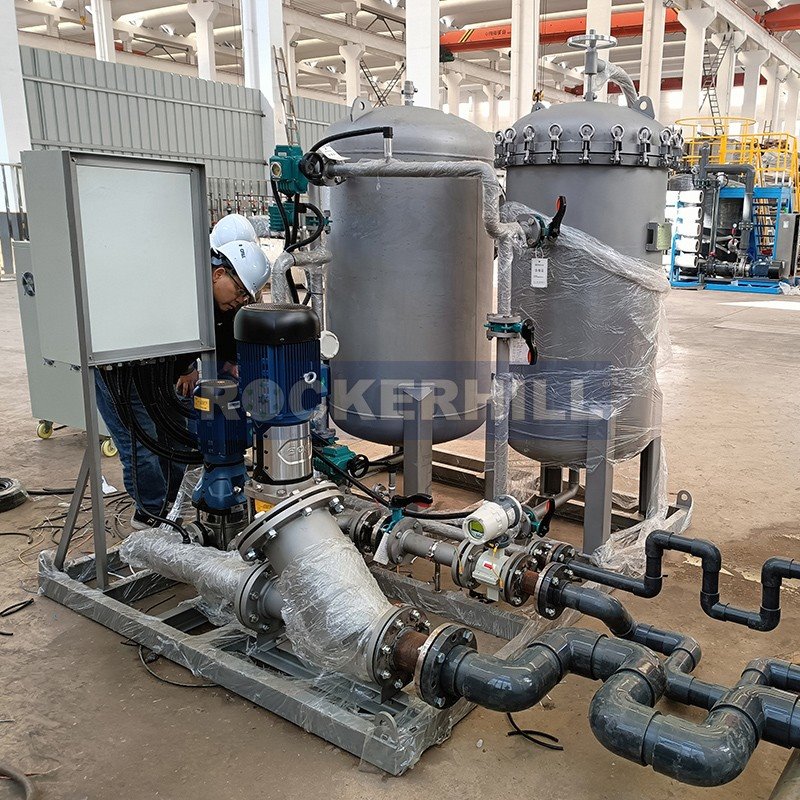
A filter skid is a pre - engineered and pre - fabricated unit that houses one or more filters, along with associated valves, pumps, and instrumentation. Its primary function is to remove contaminants from the fluid in the closed - loop system, ensuring that the fluid remains clean and suitable for its intended use.
Filter skids are highly versatile and can be customized to meet the specific requirements of different closed - loop systems. They can be designed to handle a wide range of flow rates, pressures, and types of contaminants. For example, in a hydraulic closed - loop system, a filter skid may be used to remove fine particles that could damage the hydraulic pumps and valves. In a water treatment closed - loop system, the filter skid can remove sediment, bacteria, and other impurities to ensure the quality of the water.
How a Filter Skid Works
1. Inlet and Fluid Intake
The process begins when the contaminated fluid from the closed - loop system enters the filter skid through the inlet port. The inlet is typically connected to the main pipeline of the closed - loop system, and the flow of the fluid is regulated by a valve. This valve can be manually operated or automated, depending on the design of the filter skid and the requirements of the system.
2. Filtration Process
Once the fluid enters the filter skid, it passes through one or more filters. There are different types of filters that can be used in a filter skid, including cartridge filters, bag filters, and screen filters. Each type of filter has its own unique characteristics and is suitable for removing different sizes and types of contaminants.
- Cartridge Filters: These filters consist of a replaceable cartridge made of a porous material, such as paper, polyester, or cellulose. The fluid passes through the cartridge, and the contaminants are trapped on the surface or within the pores of the cartridge. Cartridge filters are commonly used for removing fine particles and are available in different micron ratings, which determine the size of the particles that can be removed.
- Bag Filters: Bag filters are made of a fabric bag that is suspended inside a housing. The fluid flows through the bag, and the contaminants are collected inside the bag. Bag filters are capable of handling high flow rates and are often used for removing larger particles and debris.
- Screen Filters: Screen filters use a mesh screen to trap contaminants. The size of the mesh determines the size of the particles that can be removed. Screen filters are simple in design and are often used as a pre - filter to remove larger particles before the fluid passes through a more fine - tuned filter.
As the fluid passes through the filters, the contaminants are gradually removed, and the clean fluid emerges from the outlet of the filter. The efficiency of the filtration process depends on several factors, including the type and quality of the filter, the flow rate of the fluid, and the concentration of contaminants in the fluid.
3. Monitoring and Control
To ensure the proper functioning of the filter skid, it is equipped with various monitoring and control devices. These devices include pressure gauges, flow meters, and differential pressure sensors.
- Pressure Gauges: Pressure gauges are used to measure the pressure of the fluid at different points in the filter skid. By monitoring the pressure, operators can detect any blockages or restrictions in the system. A sudden increase in pressure may indicate that the filter is clogged and needs to be replaced or cleaned.
- Flow Meters: Flow meters measure the flow rate of the fluid through the filter skid. This information is important for ensuring that the filter skid is operating at the designed flow rate and for detecting any changes in the flow rate that may indicate a problem with the system.
- Differential Pressure Sensors: Differential pressure sensors measure the difference in pressure across the filter. As the filter becomes clogged with contaminants, the differential pressure increases. When the differential pressure reaches a pre - set limit, it signals that the filter needs to be replaced or cleaned.
4. Backwashing and Filter Maintenance
Over time, the filters in the filter skid will become saturated with contaminants and will need to be replaced or cleaned. Many filter skids are equipped with a backwashing system, which is used to clean the filters without having to remove them from the skid.
During the backwashing process, the flow of the fluid is reversed, and clean fluid is forced through the filter in the opposite direction. This dislodges the contaminants that have accumulated on the filter and flushes them out of the system. The backwashing process can be automated, and it is typically triggered when the differential pressure across the filter reaches a certain level.
In some cases, the filters may need to be replaced completely. This is usually done when the filter has reached the end of its service life or when it cannot be effectively cleaned through backwashing. The replacement of filters is a relatively simple process and can be carried out by trained personnel.
5. Outlet and Return to the Closed - Loop System
After the fluid has been filtered and any necessary maintenance has been carried out, the clean fluid exits the filter skid through the outlet port. The outlet is connected to the main pipeline of the closed - loop system, and the clean fluid is returned to the system to continue its circulation.
Benefits of Using a Filter Skid in a Closed - Loop System
- Improved System Efficiency: By removing contaminants from the fluid, a filter skid helps to maintain the efficiency of the closed - loop system. Clean fluid reduces the friction and wear on the system components, which can lead to lower energy consumption and longer equipment life.
- Enhanced System Reliability: Contaminants in the fluid can cause damage to the system components, leading to breakdowns and downtime. A filter skid helps to prevent these problems by keeping the fluid clean, which improves the reliability of the system and reduces the need for costly repairs.
- Compliance with Regulations: In many industries, there are strict regulations regarding the quality of the fluid used in closed - loop systems. A filter skid can help companies to comply with these regulations by ensuring that the fluid meets the required standards.
Conclusion
As a filter skid supplier, I understand the importance of providing high - quality filter skids that are designed to meet the specific needs of closed - loop systems. The operation of a filter skid in a closed - loop system is a complex but essential process that ensures the continuous and efficient functioning of the system.
If you are looking for a reliable filter skid for your closed - loop system, I encourage you to explore our range of products. You can learn more about our Skid Filter and Filter Skid Design options on our website. We are committed to providing customized solutions that meet your unique requirements and to helping you achieve optimal performance from your closed - loop system. Contact us today to start a discussion about your filter skid needs and explore the possibilities of working together.
References
- "Industrial Filtration Handbook" by Andrew S. Tepper
- "Fluid Power Systems" by Anthony Esposito
- Technical documents from leading filter manufacturers




