


As a supplier of radial gates, I understand the critical importance of seismic design requirements in ensuring the safety and functionality of these structures. Radial gates, also known as Tainter gates, are widely used in dams and water control systems to regulate water flow. In regions prone to seismic activity, these gates must be designed to withstand the forces generated by earthquakes to prevent catastrophic failures.
Seismic Design Considerations
1. Site - Specific Seismic Hazard Assessment
The first step in seismic design is to conduct a comprehensive site - specific seismic hazard assessment. This involves analyzing historical earthquake data, fault characteristics, and soil conditions at the project site. Engineers use this information to determine the design earthquake ground motion parameters, such as peak ground acceleration (PGA), spectral acceleration, and earthquake recurrence intervals. These parameters are crucial as they form the basis for the seismic design of the radial gate. For example, in an area close to an active fault, the PGA may be significantly higher compared to a region with less seismic activity. This higher PGA will require the radial gate to be designed to resist greater lateral forces.
2. Structural Integrity and Load - Bearing Capacity
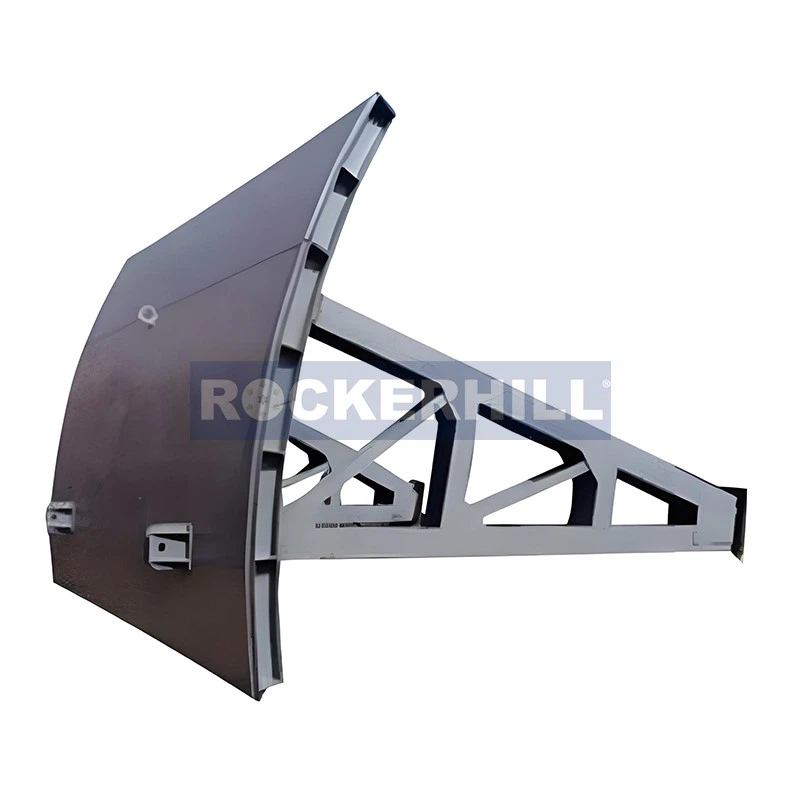
Radial gates must be designed to maintain their structural integrity during an earthquake. This means that all components of the gate, including the skin plate, girders, trusses, and hinges, should be able to withstand the seismic loads without significant damage. The load - bearing capacity of the gate is determined by considering the dead load (the weight of the gate itself), live load (water pressure), and seismic load. The seismic load is calculated based on the seismic design parameters obtained from the site - specific assessment. For instance, the girders of the radial gate should be sized and reinforced to resist the bending and shear forces induced by the earthquake.
3. Hinge Design and Functionality
The hinges of a radial gate are critical components that allow the gate to rotate and open or close. During an earthquake, the hinges must be able to function properly without jamming or failing. Seismic design requirements for hinges include ensuring sufficient strength and flexibility. The hinge pins should be designed to withstand the axial and shear forces generated by the seismic motion. Additionally, the hinge connections should be designed to accommodate the small displacements and rotations that occur during an earthquake without causing excessive stress concentrations.
4. Dynamic Response Analysis
A dynamic response analysis is often performed to evaluate how the radial gate will respond to seismic forces. This analysis takes into account the mass, stiffness, and damping characteristics of the gate. By using computer - based simulation models, engineers can predict the displacement, acceleration, and stress distribution in the gate during an earthquake. This helps in identifying potential weak points in the design and making necessary modifications. For example, if the analysis shows that a certain part of the gate experiences excessive stress, additional reinforcement can be added to that area.
International Standards and Guidelines
There are several international standards and guidelines that provide recommendations for the seismic design of radial gates. For example, the International Commission on Large Dams (ICOLD) has published guidelines on dam safety, which include considerations for seismic design of dam - related structures such as radial gates. These guidelines provide a framework for engineers to follow in terms of seismic hazard assessment, structural design, and safety evaluation.
In the United States, the Federal Emergency Management Agency (FEMA) and the American Society of Civil Engineers (ASCE) have developed standards for seismic design of structures. These standards are widely used in the design of radial gates in the US and provide detailed requirements for load calculations, material selection, and construction practices.
Our Approach as a Radial Gate Supplier
As a supplier of Dam Radial Gate and Tainter Gate, we are committed to meeting the highest seismic design requirements. Our team of experienced engineers works closely with clients to understand the specific seismic conditions at their project sites. We conduct detailed site - specific seismic hazard assessments and use advanced design and analysis tools to ensure that our radial gates are designed to withstand the expected seismic forces.
We also use high - quality materials in the manufacturing of our radial gates. The steel used in the construction of the gate is carefully selected for its strength and ductility, which are essential properties for withstanding seismic loads. Our manufacturing processes are strictly controlled to ensure that the gates are built to the highest quality standards.

In addition to design and manufacturing, we provide comprehensive installation and maintenance services. Our installation teams are trained to ensure that the radial gates are installed correctly, which is crucial for their proper functioning during an earthquake. We also offer regular maintenance services to inspect the gates for any signs of damage or wear and tear, and to make necessary repairs or adjustments.
Importance of Seismic Design for Radial Gates
The seismic design of radial gates is of utmost importance for several reasons. Firstly, it ensures the safety of the dam and the surrounding area. A failure of a radial gate during an earthquake can lead to uncontrolled water release, which can cause flooding and other disasters. Secondly, it helps to maintain the functionality of the water control system. In the event of an earthquake, the radial gates need to be able to open and close properly to regulate the water level and prevent over - topping of the dam. Finally, proper seismic design can reduce the long - term maintenance and repair costs of the radial gates. By designing the gates to withstand seismic forces, the likelihood of damage and the need for frequent repairs are minimized.
Contact Us for Seismic - Resistant Radial Gates
If you are in need of high - quality radial gates that meet the strictest seismic design requirements, we invite you to contact us. Our team of experts is ready to work with you to provide customized solutions for your project. Whether you are building a new dam or upgrading an existing water control system, we can offer you the best radial gate products and services. We are dedicated to ensuring the safety and reliability of your water infrastructure, especially in seismic - prone areas.
References
- International Commission on Large Dams (ICOLD). Guidelines on Dam Safety.
- Federal Emergency Management Agency (FEMA). Seismic Design Standards.
- American Society of Civil Engineers (ASCE). Structural Design Codes for Seismic Resistance.




