


As a ball valve supplier, I understand the critical importance of test standards in ensuring the quality, reliability, and performance of ball valves. In this blog post, I'll delve into the various test standards for ball valves, which are essential for both manufacturers and end - users.
1. Pressure Testing
Pressure testing is one of the most fundamental tests for ball valves. It helps to verify the valve's ability to withstand the specified pressure without leakage.
Hydrostatic Pressure Test
The hydrostatic pressure test is a widely used method. In this test, the valve is filled with a liquid, usually water, and then pressurized to a specific level. For general industrial ball valves, the test pressure is often 1.5 times the valve's rated pressure.
For example, if a ball valve is rated for 1000 psi, the hydrostatic test pressure will be set at 1500 psi. The valve is then held at this pressure for a specified time, typically 5 - 10 minutes. During this period, inspectors carefully check for any signs of leakage, such as drops of water or visible seepage around the valve body, stem, or connections.
This test ensures that the valve body can withstand the high - pressure conditions it may encounter during normal operation. A well - designed and manufactured ball valve should pass this test without any leakage, indicating its structural integrity.
Gas Pressure Test
The gas pressure test, usually using air or nitrogen, is another important pressure test. It is often used to detect small leaks that may not be easily detectable during the hydrostatic test.
The test pressure for gas testing is typically lower than that of the hydrostatic test, usually around 1.1 times the valve's rated pressure. The valve is pressurized with the gas, and then a soap solution or a leak - detection device is used to check for leaks. Any bubbles formed on the surface of the valve indicate a leak.
Gas pressure testing is especially important for applications where the medium flowing through the valve is a gas, as even a small leak can cause significant problems, such as loss of product, safety hazards, or environmental pollution.
2. Flow Capacity Testing
Flow capacity testing is crucial to determine how well a ball valve can allow the flow of fluid through it. The flow coefficient (Cv) is a commonly used parameter to measure the flow capacity of a valve.
The Cv value represents the number of US gallons per minute of water at 60°F that will flow through the valve with a pressure drop of 1 psi across the valve. To measure the Cv value, a test rig is set up where water is pumped through the valve at a known pressure and flow rate. The pressure drop across the valve is measured, and the Cv value is calculated using a specific formula.
A high Cv value indicates that the valve has a large flow capacity and offers less resistance to the flow of fluid. For applications where a large volume of fluid needs to be transferred quickly, such as in water supply systems or large - scale industrial processes, ball valves with high Cv values are preferred.
For instance, in a water treatment plant, a ball valve with a high Cv value can ensure efficient water flow through the system, reducing energy consumption and improving overall system performance.
3. Sealing Performance Testing
The sealing performance of a ball valve is of utmost importance, as it directly affects the valve's ability to control the flow of fluid and prevent leakage.
Seat Leakage Test
The seat leakage test is used to check the sealing performance between the ball and the valve seats. There are different classes of seat leakage, defined by standards such as API 598 (American Petroleum Institute) and ISO 5208 (International Organization for Standardization).
For example, Class VI seat leakage is the most stringent, allowing only a very small amount of leakage. In the seat leakage test, the valve is pressurized on one side, and the amount of fluid that leaks through the seats to the other side is measured. The test can be conducted using either a liquid or a gas, depending on the application requirements.

A well - sealed ball valve should meet the specified seat leakage class. For applications where zero leakage is required, such as in the pharmaceutical or food industries, ball valves with high - quality seats and precise manufacturing are necessary to achieve Class VI seat leakage.
Stem Seal Test
The stem seal test focuses on the sealing performance around the valve stem. The stem is the part of the valve that connects the ball to the actuator and allows for the opening and closing of the valve.
Leakage around the stem can be a significant problem, as it can lead to the escape of the fluid being handled, as well as potential contamination of the surrounding environment. In the stem seal test, the valve is pressurized, and the area around the stem is inspected for any signs of leakage.
Proper stem sealing is achieved through the use of high - quality packing materials, such as graphite or PTFE (polytetrafluoroethylene), and a well - designed stem packing gland. Regular maintenance and replacement of the stem packing may be required to ensure long - term sealing performance.
4. Fire - Safe Testing
In many industrial applications, especially in the oil and gas industry, fire - safe performance is a critical requirement for ball valves. Fire - safe testing is designed to evaluate the valve's ability to prevent leakage and maintain its functionality in the event of a fire.
During the fire - safe test, the valve is subjected to a high - temperature fire for a specified period, usually around 30 minutes. After the fire exposure, the valve is then pressure - tested to check for leakage.
A fire - safe ball valve should be able to withstand the fire without significant damage to its structure and should still be able to seal effectively after the fire. This is achieved through the use of fire - resistant materials and a special design that can prevent the loss of the sealing function even under extreme heat conditions.
For example, in an offshore oil platform, a fire - safe ball valve can help prevent the spread of fire and the release of flammable fluids, protecting the safety of personnel and the integrity of the facility.
5. Actuator Performance Testing
For ball valves equipped with actuators, such as Hydraulic Ball Valve, Electric Actuated Ball Valve, and Pneumatic Ball Valve, actuator performance testing is essential.
Hydraulic Actuator Testing
For hydraulic ball valves, the hydraulic actuator test checks the actuator's ability to open and close the valve smoothly and accurately. The test involves applying the specified hydraulic pressure to the actuator and measuring the force and speed of the valve operation.
The actuator should be able to open and close the valve within the specified time and with the required torque. Any problems, such as slow operation, excessive force requirements, or inconsistent movement, may indicate issues with the hydraulic system or the actuator itself.
Electric Actuator Testing
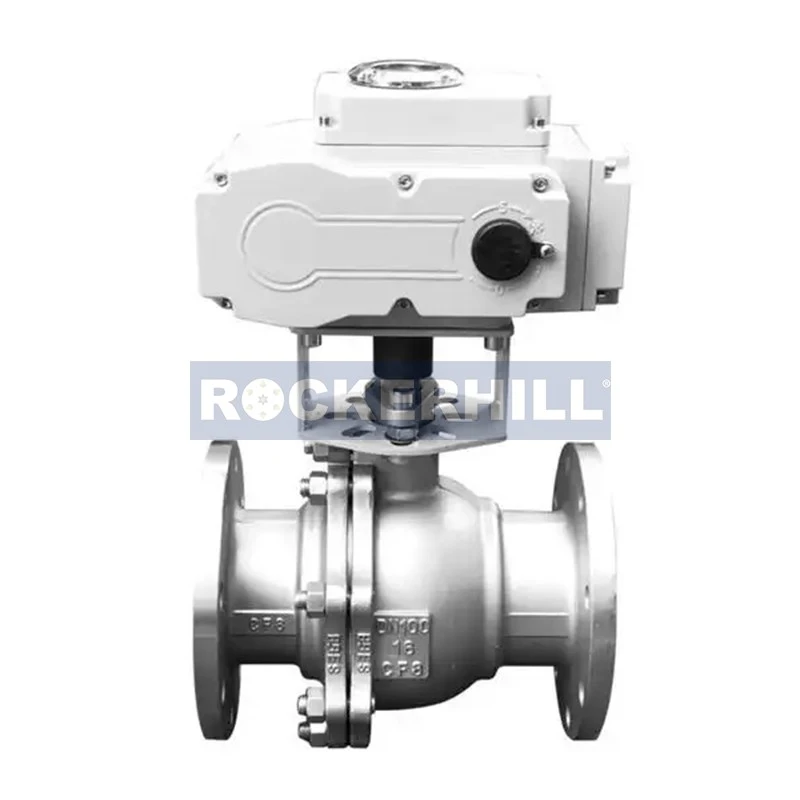
Electric actuated ball valves are tested to ensure that the electric motor and the associated control system work properly. The test includes checking the electrical connections, the motor's starting and stopping performance, and the accuracy of the position control.
The electric actuator should be able to open and close the valve precisely according to the control signals. Any electrical malfunctions, such as overheating, short - circuits, or incorrect positioning, need to be addressed to ensure the reliable operation of the valve.
Pneumatic Actuator Testing
Pneumatic ball valves are tested by applying the specified air pressure to the pneumatic actuator. The test checks the actuator's response time, the force it can generate, and the ability to hold the valve in the open or closed position.
The actuator should be able to operate the valve quickly and accurately, and it should be able to maintain the valve's position under different operating conditions. Leakage in the pneumatic system or improper adjustment of the actuator can lead to problems in valve operation.
Conclusion
As a ball valve supplier, we are committed to ensuring that all our ball valves meet or exceed the relevant test standards. By adhering to these strict test standards, we can provide our customers with high - quality ball valves that offer reliable performance, long - term durability, and safety.
If you are in need of ball valves for your industrial applications, whether it's a simple manual ball valve or a complex actuated ball valve, we can offer you a wide range of products that meet your specific requirements. Our team of experts can also provide you with professional advice and support to help you select the most suitable ball valve for your project. Please feel free to contact us for procurement and further discussions.
References
- API 598: Valve Inspection and Testing, American Petroleum Institute.
- ISO 5208: Industrial Valves - Pressure Testing of Valves, International Organization for Standardization.
- ASME B16.34: Valves - Flanged, Threaded, and Welded End, American Society of Mechanical Engineers.




