Rockerhill Global Limited
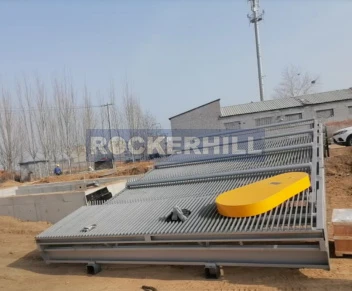
An intake screen and gate system protects a water intake from debris and lets operators isolate the channel for maintenance. The screen removes leaves, branches, plastics, fish and marine growth. The gate shuts the flow off so the screen, pump or channel can be dewatered and serviced. Choosing one water intake screen manufacturer for both parts avoids interface problems between the equipment and the civil channel.
Water intake screen types
|
Screen |
Typical role |
Opening |
|
Bar screen |
First coarse stage at the channel entrance |
Coarse |
|
Traveling water screen (band screen) |
River, seawater and cooling water intakes |
Medium to fine |
|
Step screen |
Fine screening with a compact stepped bar pack |
Fine |
|
Rotary drum screen |
Fine screening of pumped or channel flow |
Fine |
The right choice depends on flow, water level range, debris load and the equipment being protected, such as pumps, condensers or desalination pretreatment.
Why pair the intake screen and gate
Screens need regular cleaning and repair, and that requires dry access. A typical arrangement along the flow is:
- A bar screen or trash rack to stop large debris.
- A stop log or sluice gate upstream of the fine screen, so one channel can be isolated while others keep running.
- A traveling water screen or other fine screen.
- The pump suction or treatment inlet.
Radial gates handle larger channel openings and flow control. Flap gates on outfalls prevent backflow. Specifying the screen and gate together lets the supplier match channel width, sill level, deck elevation and operating loads in one design.
What to check in a water intake screen manufacturer
- Range: screens and gates from one source, with compatible dimensions and controls.
- Materials: SS304, SS316L or duplex stainless steel for seawater and brackish water, with matching fasteners and coatings.
- References: Rockerhill has supplied a traveling water screen for a Colorado River project in Mexico, traveling band screens for a 4,000 m³/h seawater reverse osmosis (SWRO) project in the Middle East, and a bar screen for PPLAK in Singapore.
- Manufacturing and support: Rockerhill reports a 17,000 m² manufacturing base in Jiangsu and an 18-month warranty (Rockerhill).
Data needed for a quotation
Send these items with a channel drawing:
- Water source: river, lake, seawater, cooling water or wastewater
- Design flow (m³/h) and number of screens
- Channel width and depth, highest and lowest water level, deck elevation
- Required opening (mm) and debris type
- Material and gate type: stop log, sluice, radial or flap
- Power supply and control requirements
FAQ
Should the gate sit upstream or downstream of the screen? Normally upstream, so the gate isolates the screen and channel for maintenance. Confirm the arrangement against your own channel layout.
Can one manufacturer supply both? Yes. Rockerhill lists bar screens, band screens, step screens, fine screens and rotary drum screens, together with sluice, radial, flap and stop log gates.
Which material suits seawater? Stainless steel SS316L or duplex, depending on water quality and design life.
Get a quote
Contact Rockerhill, a water intake screen manufacturer based in Beijing with a manufacturing base in Jiangsu, at Allie.s@rockerhillcn.com. Share your flow, channel drawing and opening size, and we will propose the intake screen and gate package.