


Desalination is the process of removing dissolved salts, minerals, and other impurities from seawater or brackish water to produce freshwater suitable for human consumption, irrigation, and industrial applications. It is a vital solution in regions facing water scarcity, particularly in arid and coastal areas.
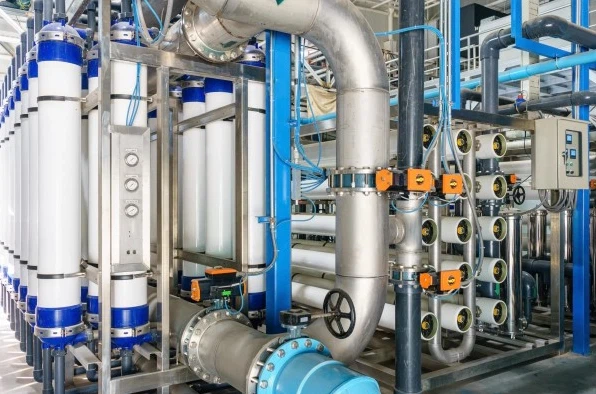
How Does a Desalination Plant Work?

1. Reverse Osmosis (RO) Desalination
This is the most widely adopted method today.
Key Steps:
- Seawater Intake: Raw seawater is collected through intake structures.
- Pre-Treatment: Filtration removes suspended solids, microorganisms, and organics to protect membranes.
- High-Pressure Pumping: Water is forced through semi-permeable RO membranes under high pressure.
- Membrane Separation: Salts and impurities are rejected; only clean water passes through.
- Post-Treatment: Water is remineralized (to restore taste and pH balance) and disinfected.
- Brine Disposal: Concentrated saline water is safely discharged back into the sea.
2. Thermal Desalination (Multi-Stage Flash – MSF, or Multi-Effect Distillation – MED)
Used mainly in oil-rich, energy-abundant regions.
Key Steps:
- Seawater is heated to generate steam.
- Steam is condensed to collect freshwater.
- Salt and impurities are left behind and flushed out as brine.
Advantages of the Desalination Process
One of the primary benefits of desalination is its ability to provide a reliable and consistent source of freshwater, especially in regions where freshwater resources are limited or overexploited. Unlike groundwater or surface water supplies, desalinated water is not dependent on seasonal rainfall, making it an excellent solution for arid and drought-prone areas.
Desalination also plays a crucial role in supporting urban development, tourism, and industrial growth in coastal regions. Many large cities and island nations now rely heavily on desalination to meet their daily water needs.
Additionally, the process is technologically mature and scalable, offering flexibility to design small, modular units or large-scale municipal plants depending on demand. Modern desalination systems also incorporate advanced monitoring and automation, improving operational efficiency and water quality control.
Finally, desalinated water is generally free from pathogens, heavy metals, and most contaminants, making it safe and suitable for human consumption, industrial use, and sensitive applications like electronics manufacturing or pharmaceuticals.
Disadvantages of the Desalination Process
Despite its benefits, desalination also presents several significant challenges.
- High energy consumption. Both reverse osmosis and thermal desalination processes require large amounts of electricity or thermal energy, which can drive up operational costs and carbon emissions if not powered by renewable sources.
- High capital investment required for building and maintaining desalination infrastructure. This includes intake systems, high-pressure pumps, specialized membranes, and brine discharge units, making it less accessible for low-income regions without external funding.
- Environmental impact is another key issue. Desalination generates concentrated brine waste that, if not properly managed, can harm marine ecosystems when discharged into the ocean due to its high salinity and potential chemical residues from pre-treatment.
- Desalinated water is stripped of beneficial minerals, such as calcium and magnesium, which may require remineralization for taste and health reasons. And finally, because desalination is more practical near coastal areas, inland regions may face logistical and economic challenges in adopting the technology.


