


Hey there! I'm working as a stop log supplier, and today I wanna chat about the standards for stop log construction. Stop logs are super important in water control systems, and getting their construction right is crucial.
First off, let's talk about materials. The choice of material can really make or break a stop log. One popular option is aluminum alloy. Aluminum alloy stop logs Aluminum Alloy Stop Logs have a bunch of advantages. They're lightweight, which makes them easy to handle during installation and removal. This is especially important when you've got to move them around a lot. Plus, aluminum is resistant to corrosion. In water environments, corrosion can be a major problem as it weakens the structure over time. With aluminum alloy stop logs, you don't have to worry as much about rust eating away at your investment.
Another great material is stainless steel. Stainless steel flap gates Stainless Steel Flap Gates are known for their durability. They can withstand high pressures and harsh weather conditions. Stainless steel has a high strength - to - weight ratio, meaning it can handle a lot of stress without being overly heavy. This is ideal for stop logs that need to hold back large volumes of water.
Now, let's get into the design aspect. The shape of the stop log matters a whole lot. A well - designed stop log should have a smooth surface. This helps to reduce friction when it's being inserted or removed from the guide rails. Friction can cause wear and tear on both the stop log and the guide rails, shortening their lifespan. A smooth surface also allows for a better seal against the water. When water is trying to push through, a good seal is essential to prevent leaks.
The dimensions of the stop log are also critical. The length, width, and height need to be precisely measured. If the stop log is too short, it won't be able to block the water effectively. On the other hand, if it's too long, it might not fit properly in the channel or between the guide rails. The width should be just right to fit snugly between the side walls of the structure where it's being used. And the height should be sufficient to hold back the expected water level.
Strength is another key standard. Stop logs need to be strong enough to withstand the pressure exerted by the water. The pressure increases with the depth of the water, so stop logs in deeper channels need to be stronger. Engineers use complex calculations to determine the required strength based on factors like the water depth, the length of the stop log, and the type of water flow. Reinforcements might be added to the stop log to increase its strength. This could include internal ribs or external bracing.
Sealing is a vital part of stop log construction. A good seal prevents water from leaking around the stop log. There are different types of seals that can be used. Rubber seals are common because they're flexible and can conform to the shape of the stop log and the surrounding structure. They also have good water - resistant properties. The seal needs to be properly installed and maintained. Over time, the seal can wear out, so regular inspections are necessary to replace it if needed.
Installation and handling are also part of the standards. Stop logs should be easy to install and remove. They need to be designed in a way that allows for safe and efficient handling. This might involve having lifting points on the stop log so that it can be easily picked up by a crane or other lifting equipment. The lifting points should be strong enough to support the weight of the stop log during lifting and movement.
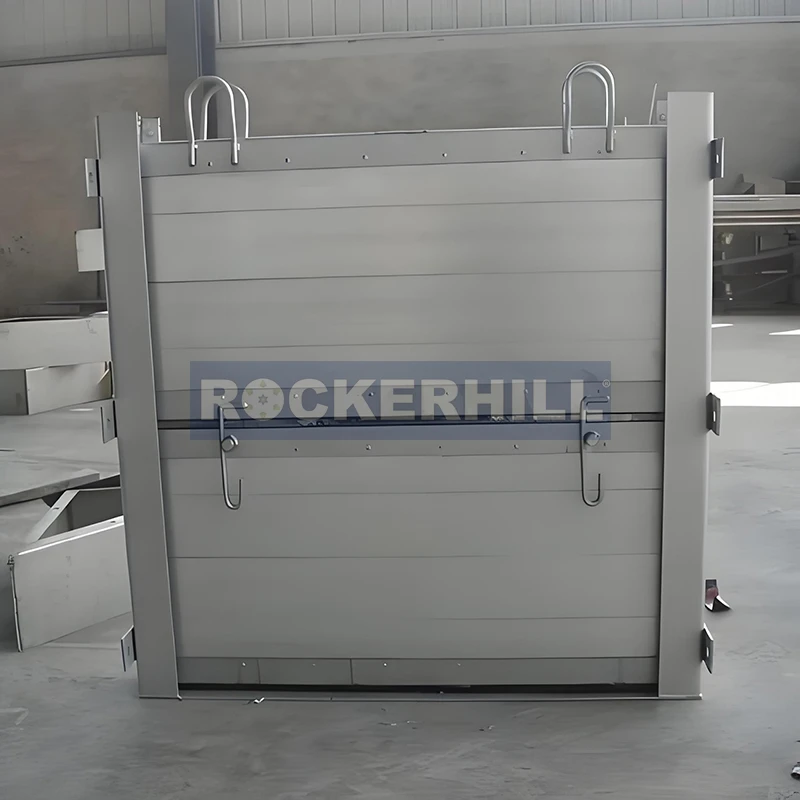

When it comes to stop logs for water control Stop Logs for Water Control, they need to be reliable. You don't want a stop log to fail when there's a heavy rain or a flood. That's why quality control during the construction process is so important. Every stop log should be inspected thoroughly before it leaves the factory. This includes checking the dimensions, the strength, the seal, and the overall quality of the construction.
In addition to these technical standards, there are also environmental considerations. Stop logs should be made from materials that are environmentally friendly. For example, using recyclable materials like aluminum and stainless steel is a great option. This reduces the environmental impact of the stop log throughout its lifecycle.
If you're in the market for high - quality stop logs, I'd love to have a chat with you. Whether you need aluminum alloy stop logs, stainless steel flap gates, or other stop logs for water control, we've got you covered. We adhere to all the standards I've talked about here to ensure that you get a product that's reliable, durable, and effective. Reach out to us to start the procurement process and let's work together to find the perfect stop log solution for your needs.
References
- Engineering textbooks on water control structures
- Industry standards and guidelines for stop log construction
- Research papers on the performance of different stop log materials




