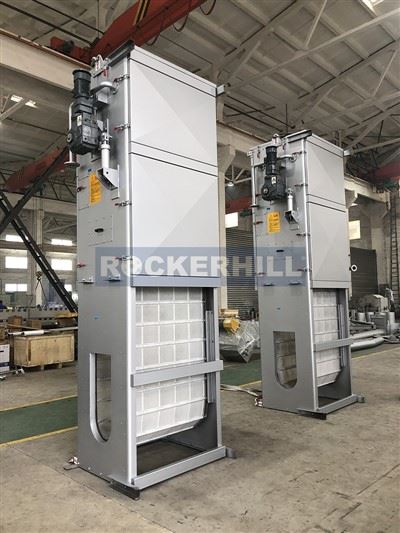
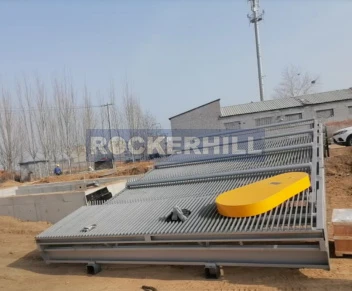
Project summary: In 2026, ROCKERHILL was awarded the contract to design and build a containerized balance-of-plant (BOP) process skid for a CO2 direct air capture (DAC) project in Canada, after an international competitive tender. The skid receives CO2 and condensate from the DAC units, cools and dries the gas, compresses it and sends it downstream. It was engineered to the ASME pressure vessel code and CSA B51, with CRN registration through ABSA and cUL/CSA electrical components, and designed for extreme Canadian winters.

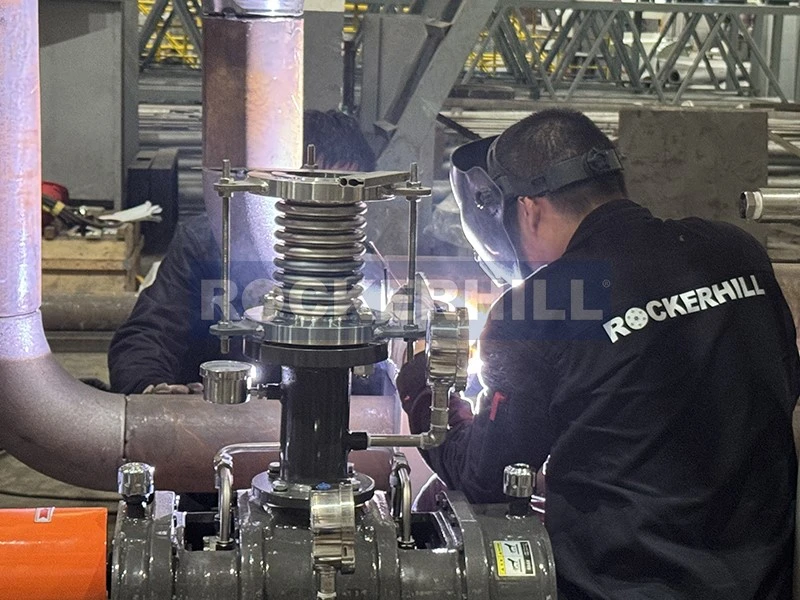
Project at a glance
|
Item |
Detail |
|
Application |
CO2 direct air capture, balance-of-plant skid |
|
Location |
Canada |
|
Award |
2026, May |
|
Scope |
27 supply line items, detailed engineering and full skid assembly |
|
Major equipment |
Custom heat exchangers, ASME-coded vacuum scrubbers, dry screw compressor, vacuum pump, local control panel, transformer |
|
Codes |
ASME Pressure Vessel Code, CSA B51, CRN registration (ABSA), cUL/CSA electrical |
|
Climate design |
Container heating, ventilation and process insulation for extreme winter temperatures |
|
Controls |
Local control panel with local/remote selection; PLC or customer DCS interface |
|
Testing |
Factory acceptance test (FAT) before shipment |
The challenge
Direct air capture plants pull CO2 from ambient air in sorbent or solvent-based contactor units. What comes out of those units is not yet a usable product: it is a wet, low-pressure CO2 stream with condensate. The balance-of-plant skid turns that stream into dry, compressed CO2 that downstream storage or utilization can use.
For this project, the client needed a supplier that could:
- Integrate many different pieces of equipment (exchangers, scrubbers, compressor, vacuum pump, pumps, analyzers and controls) into one tested package.
- Meet Canadian pressure equipment law, meaning ASME design, CSA B51 and provincial CRN registration for every regulated vessel and pipe.
- Operate reliably through a Canadian winter, inside a container, with process lines that cannot be allowed to freeze.
- Deliver quickly, with the shortest possible schedule from award to shipment.
The solution: one containerized BOP skid
ROCKERHILL engineered the system as a single containerized process skid with five functional sections.
1. Receive
Flow-controlled inlet branches take CO2 and condensate from each DAC unit. Spare branches are included so the plant can add units later without rebuilding the skid.
2. Condition
Two cooling stages and two scrubbers (vacuum and pressurized) remove water from the gas. A condensate extraction pump sends recovered water to the steam loop. Tie-ins for future heat recovery are reserved.
3. Compress
A dry screw booster compressor with its own motor, local controls and speed control raises CO2 pressure. CO2 concentration and relative humidity are measured online before the gas leaves the skid.
4. Reject heat
A closed cooling water loop serves both coolers and returns to a multi-fan air cooler, so the skid does not depend on a site cooling water supply.
5. Protect and control
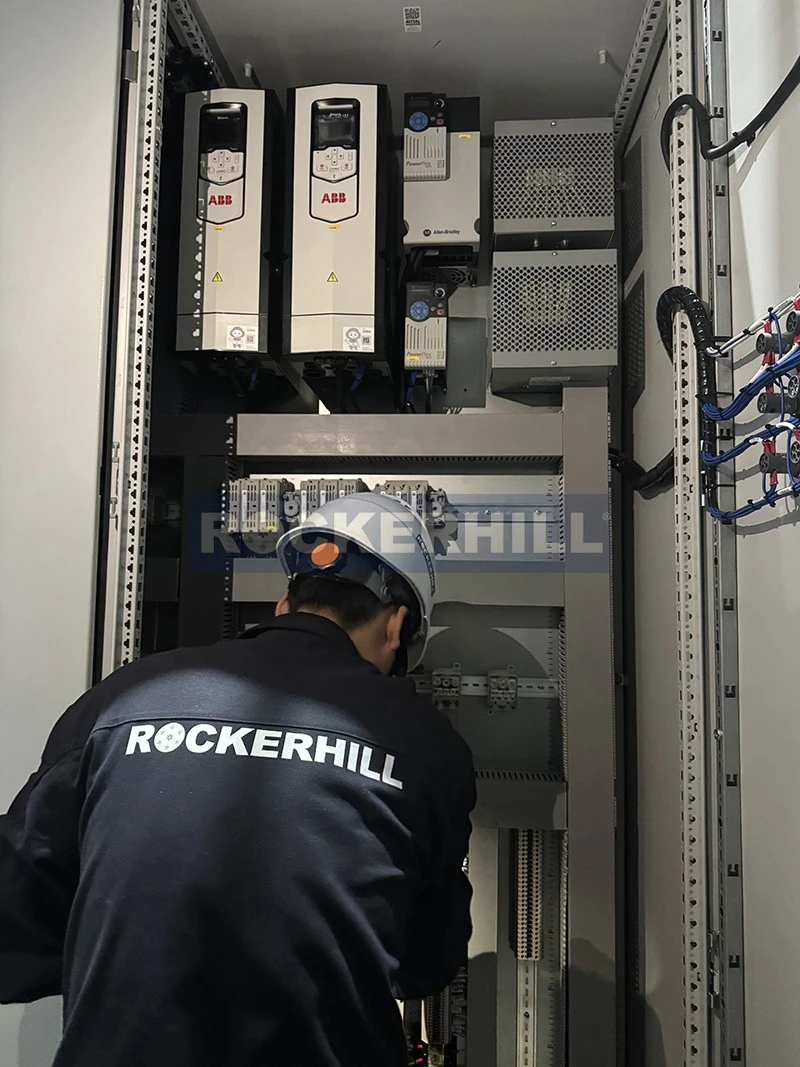
Relief valves protect vessels, coolers and the compressor. Outlet shutdown valves isolate the skid, and vent lines are routed outside the container. The local control panel provides local/remote selection and run/stopped/fault status for each pump, compressor and fan, and can interface with a PLC or the customer's DCS.
Designing for a Canadian winter
"Canadian winters shaped the design." The container has supply and exhaust ventilation plus electric heaters that hold the interior above a set minimum temperature, and process lines carry insulation for both process temperature and extreme cold. Equipment layout keeps valves and instruments accessible for maintenance inside the enclosure. [Add photo of container interior / insulation, if available.]
Code compliance and CRN
Every regulated pressure item on the skid was designed to the ASME pressure vessel code and CSA B51, with CRN registration through ABSA for all pressure vessels and piping. Electrical components were specified with cUL/CSA certification so the skid can be connected under the Canadian Electrical Code.
For an explanation of how CRN registration works for an imported skid, see our guide: [link to Article 04: CRN Registration for Process Skids].
Factory acceptance testing
Before shipment, the skid goes through a factory acceptance test that the client can witness in person or by video. The FAT covers:
- Document review against the approved design
- Dimensional and weld inspection
- Pressure and leak tests, with NDE records
- Electrical and loop checks
- Functional runs of pumps, fans, compressor and control sequences
- Punch-list close-out before release

Why it matters for other carbon capture projects
The same design approach applies to point-source carbon capture, CO2 compression and drying, biogas upgrading and other gas-handling skids: integrate the equipment in a factory, test it as one unit, and ship it ready to connect. The DAC BOP skid can be customized for:
- Flow rate, CO2 composition, inlet conditions and outlet pressure
- Number of inlet branches and operating modes
- Voltage, enclosure rating, hazardous-area classification and PLC/HMI preference
- Container heating, ventilation and minimum ambient temperature
- Footprint, lifting points, modular split and container or break-bulk shipping
- Materials: SS304, SS316L, duplex, higher alloys or coated carbon steel
Also delivered: H2O2 production skid for the USA
ROCKERHILL also designed and built a low-concentration hydrogen peroxide (H2O2) production skid for a client in the United States: an electrochemical, PLC-controlled skid that makes 1–5 wt% H2O2 on site from water and air, with 120 V / 60 Hz power, a NEMA 4X / IP65 panel and full FAT/SAT documentation. [link to Article 06]
About ROCKERHILL
ROCKERHILL is a designer and manufacturer of custom process skids, with operating references including an ASME-coded CO2 carbon capture skid for Canada and an H2O2 production skid for the USA, and clients including Seiko Epson (Singapore). Every skid comes with commissioning support, training, a spare parts list and an 18-month warranty.
Frequently asked questions
- What is a balance-of-plant skid in direct air capture? It is the process skid that takes the CO2 and condensate released by the DAC units and conditions it, typically by cooling, drying and compressing it, so it can be stored, transported or used.
- Why use a containerized skid for carbon capture? A container provides weather protection and a controlled interior temperature, and allows the whole system to be built and tested in a factory and then shipped as one unit.
- Which codes apply to a carbon capture skid in Canada? Pressure vessels and piping fall under CSA B51 and the referenced ASME codes, and each regulated design needs a CRN in the province of installation. Electrical equipment must meet the Canadian Electrical Code, usually with cUL or CSA certified components.
- Can the skid be expanded as more DAC units are added? Yes. This design includes spare inlet branches and reserved tie-ins so units can be added later.
- Can ROCKERHILL build a similar skid for point-source carbon capture? Yes. The skid is custom engineered to each project's design basis, including flow, composition, pressure and site climate.