In the summer of 2025, a CAD 110 million Carbon capture project entered operation in Canada. From groundbreaking to capturing CO2 from the air, it took just 12 months. Comparable DAC plants typically take nearly four years.
The speed did not come from the capture side. The eight DAC units on site came from different suppliers, each with its own engineering logic. The real variable was the back end: CO₂ captured by every unit fed into a single purification and liquefaction system, then compressed, dried, liquefied, and trucked 200 kilometers to an injection well two kilometers underground.
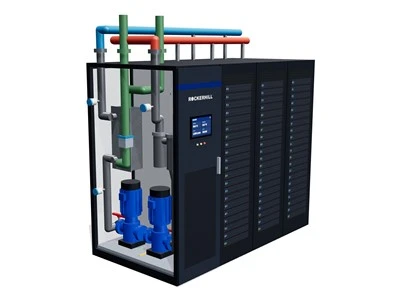
That back-end system was skid-mounted. A complete containerized CO₂ processing system-compressors, filtration, piping, control cabinets, and automation-was prefabricated and shipped for on-site installation. It was designed to handle CO₂ streams with purity as low as 85%, so whatever the front end produced, the back end could accept.
From 1 TPD to 20 TPD
The commercialization path of membrane carbon capture illustrates this trend most clearly.
One membrane system first achieved 1 tonne per day on a pilot unit in 2011, running 1,800 hours at a national carbon capture center with capture rates consistently above 90%. The more instructive step came in 2015: a "multi-insert skid" scaled capacity to 20 TPD while maintaining 90% capture over 1,000 hours on real coal-derived flue gas. These modules were assembled into standard container-sized frames-the "final form product." Future commercial systems simply replicate this skid unit.
What Goes Inside a Skid
Putting a compressor, pump, and heat exchanger into a container is equipment packaging, not skid engineering. The real challenge is fitting a complete process unit into a compact space.
One amine-based pilot skid offers a reference. It treats 100 to 500 Nm³/h of flue gas at 5–15% CO₂, targeting over 95% capture. Inside are four functional sections: gas pretreatment and cooling, absorption, heat exchange, and solvent regeneration. The skid builder must handle not equipment selection but process integration-what temperature the gas enters the absorber, how rich-solvent heat exchanges with lean solvent, how stripper pressure matches the compressor inlet. Every interface is an engineering judgment, not a catalog purchase.
DAC skids face a harder problem. At roughly 420 ppm CO₂, gas volumes are enormous and driving forces tiny, making adsorbent bed pressure drop the core issue. CFD-optimized flow distribution and adaptive control systems monitor concentration, temperature, and humidity in real time, adjusting flow rate and regeneration cycles dynamically.
An Opening Supply-Chain Position
CO₂ purification, drying, liquefaction, and compression overlap heavily with LNG and industrial gas processing. Skid builders need not learn carbon chemistry from scratch-they need to understand CO₂ phase behavior, material compatibility, and purity requirements for storage.
For engineering firms with international skid fabrication capability, the value of this position is that it does not depend on which capture technology wins. Whether DAC uses sorbents, membranes, or electrochemistry, whether point-source capture uses amines, ammonia, or calcium looping, the capture front end outputs a CO₂ stream that must be purified, dried, compressed, and liquefied. That back-end logic is technology-neutral, and skid-mounting is its natural delivery form.
Who Builds These Skids
The supply chain is forming but immature. There are skid builders in the market but only a handful with real project experiences.
With DAC project references in Canada, Rockerhill maintains in-house capability spanning detailed mechanical and process design, electrical engineering, automation and control system integration, manufacturing, and full skid modularization.