Transient analysis plays a crucial role in capacitor bank equipment selection and configuration, as it directly relates to the safe and stable operation of the power system, equipment lifespan, and stable operation of plant.
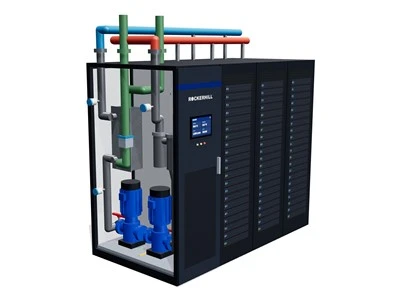
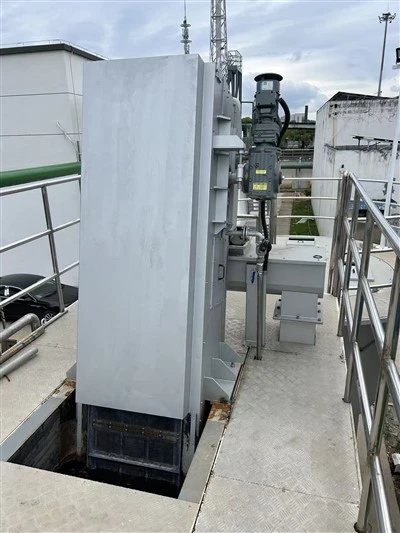
ROCKERHILL supplied international brand capacitor banks that meets IEC and CFE standards for the Aquatech project in North America and provided the following power quality test reports:
- Harmonic Measurement and Analysis: Accurately capturing the high-order harmonic components, amplitudes, and distortion rates present in the power grid.
- Resonance Risk Assessment: Assessing potential parallel or series resonances between the existing power grid structure and the capacitors to be installed. This is a core step in avoiding catastrophic system failures.
- Reactive Power Compensation Factor Calculation: Accurately quantifying the reactive power required by the system, providing a direct basis for capacitor capacity selection.
- Transient analysis
In the Chinese market, transient analysis is not mandatory, but in North America, ROCKERHILL provided complete power quality studies including transient analysis .
In simple terms, transient analysis reveals the surge voltage and current that a capacitor may withstand far exceeding normal values at the moment of a sudden change in the system (such as switching operation, fault, lightning strike, etc.). If transient analysis is ignored and capacitor banks are selected only based on steady-state parameters, the capacitors are very easy to be damaged at the moment of switching or during system faults.
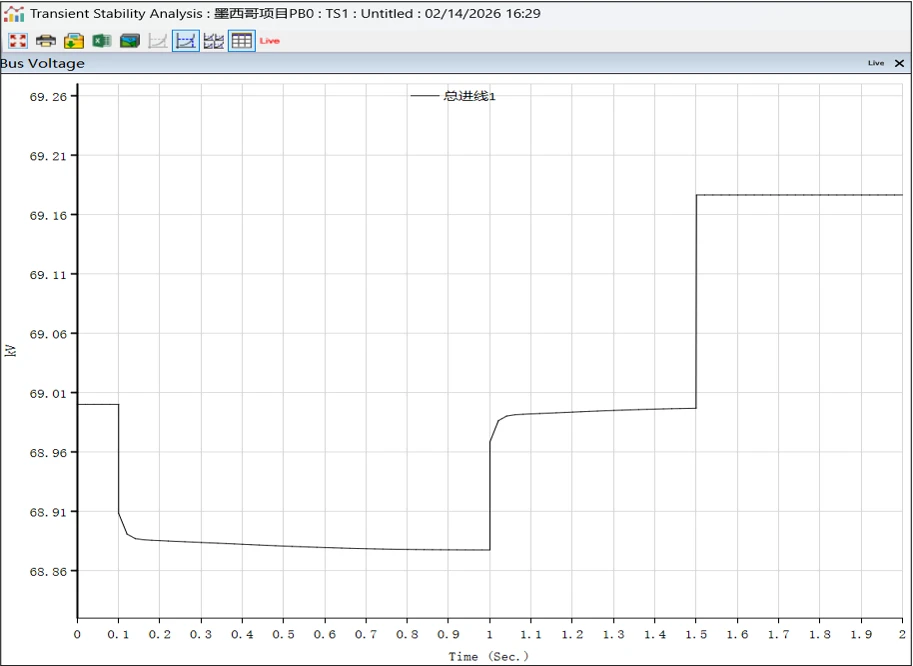
The following are the key aspects of transient analysis in capacitor bank selection:
1. Determine the ability to withstand impulse voltage (insulation coordination)
Switching overvoltage: When a capacitor bank is connected to the power grid or disconnected, high-frequency oscillations can occur due to the presence of inductance and capacitance in the circuit, leading to switching overvoltage. The amplitude of this overvoltage may be twice the rated voltage or even higher.
Selection Impact: The maximum overvoltage multiple must be calculated through transient simulation to select the rated insulation level and inter-electrode withstand voltage of the capacitor. If the selected level is too low, it will lead to dielectric breakdown.
Lightning overvoltage: Although mainly protected by surge arresters, transient analysis helps to assess the residual voltage distribution at the capacitor terminals when a lightning surge occurs, ensuring proper insulation coordination.
2. Verify the ability to withstand surge current (thermal stability and dynamic stability).
Inrush current: At the moment a capacitor is switched on, it is equivalent to suddenly applying a voltage to an uncharged capacitor, which will generate a huge inrush current. It has a high frequency and a large amplitude (up to tens or even hundreds of times the rated current).
Impact of selection:
Internal components: The fuses and connecting pieces inside the capacitor must be able to withstand the mechanical stress (electrodynamic force) without melting or deforming.
External components: When selecting a capacitor, it is necessary to confirm the maximum allowable inrush current multiple, which directly determines whether a series current-limiting reactor is needed and the selection of reactor parameters (reactance rate).
Short-circuit current: When a short-circuit fault occurs outside or inside the capacitor bank, the capacitors of the non-faulty phases will discharge to the fault point, generating a huge discharge current.
Selection Influence: The capacitor casing, terminals, and internal connections must have sufficient dynamic stability (resistance to electrodynamic forces) and thermal stability to prevent explosion or fire.
3. Avoid resonant overvoltage and overcurrent.
Harmonic Amplification and Resonance: Background harmonics exist in power systems. When a capacitor is connected, it forms an LC circuit with the system inductance. If the parameters are not properly matched, parallel or series resonance may occur at a certain harmonic frequency.
Selection Impact: Electromagnetic transient analysis (EMT) can simulate the frequency response under different operating conditions and identify potential resonant points. Based on this, an appropriate series reactance ratio (such as 6%, 7%, 12%, etc.) can be selected to avoid major harmonic sources (such as the 5th, 7th, and 3rd harmonics), preventing the capacitor from overheating, having a shortened lifespan, or even being damaged due to long-term overload operation.
4. Optimize control strategies and protection settings
Switching timing: Transient analysis can help determine the optimal switching time to minimize inrush current and overvoltage.
Protection settings: The relay protection settings for capacitor banks need to withstand normal transient processes (such as inrush current) while also being able to sensitively respond to faults. Only through accurate transient simulation can reasonable delay and action values be set to prevent false tripping or failure to trip.
5. Assess the impact on other equipment in the system.
The transient processes generated by capacitor switching not only affect the capacitor itself, but also propagate through the busbar, affecting other sensitive equipment on the same busbar (such as frequency converters, precision instruments, and transformers).
When selecting capacitors, it is necessary to consider whether the capacitor bank will generate serious electromagnetic interference (EMI). If necessary, a filter device should be added or the wiring method should be changed.

Summary: Key parameters in the selection process depend on transient analysis.
When selecting capacitor banks, the determination of the following key parameters relies heavily on transient analysis:
- Rated voltage: Voltage rise caused by long-term overvoltage and harmonics needs to be considered.
- Insulation level: Determined by the maximum operating overvoltage and lightning overvoltage.
- Permissible inrush current multiple: Determines whether a current-limiting reactor is needed.
- Reactance: Used to suppress inrush current and avoid harmonic resonance points.
- Discharge resistor/discharge coil parameters: Ensure that the residual voltage drops to a safe value within a specified time after power failure to prevent overvoltage during reclosing.
Conclusions:
Selecting capacitor banks without transient analysis is not appropriate. In modern power systems, especially in environments with a large number of power electronic devices (generating harmonics) and frequent operations, detailed electromagnetic transient simulations (such as using software like PSCAD/EMTDC or ATP-EMTP) are essential to simulate various extreme operating conditions and ensure that the selected capacitors not only "work" but also operate "safely, for a long time, and stably."
About Rockerhill
ROCKERHILL is an international engineering firm specializing in aqueduct , water treatment, and utilities. In complex water infrastructure, especially in pumping stations with extremely high requirements for power continuity, a robust power quality solution based on in-depth data analysis is far more important than a standardized product chosen solely based on experience. We are not just selling equipment; we are providing long-term security and energy efficiency improvements for our clients' critical infrastructure.